

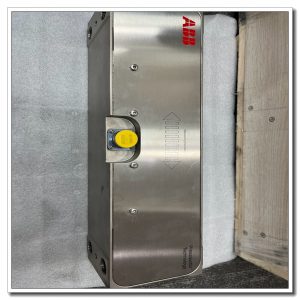
Description
Rated load: 10 kN; extended permissible load: 15 kN; transient overload capacity in measuring direction: 100 kN; allowable transverse load: 100 kN. Accuracy class: ±0.5 %FS; repeatability: 0.1 %FS. Full‑load deflection: 0.010 mm, high‑rigidity mechanical structure.
Solid stainless‑steel housing, protection class IP67. Operating temperature range: ‑20 ℃ ~ +80 ℃. Equipped with cannon‑type quick connector. Internal excitation‑coil assembly outputs millivolt raw signals. Direct connection to DCS analog‑input modules is prohibited; external PFEA amplifier is mandatory. Excessive lateral force will introduce minor measuring deviation.
When web tension acts on the measuring roll, compressive force is transferred to PFTL201C‑10kN. Applied mechanical stress changes magnetic permeability of internal magneto‑elastic alloy, and the secondary coil generates induction voltage proportional to the acting force. Normally two load cells are installed at both ends of the roll shaft; total web tension is obtained by summing signals from two sensors. This sensor can eliminate the interference of roll self‑weight for tension measurement.
Zero‑point adjustment, span calibration and fault diagnosis are all completed on the PFEA amplifier unit. No calibration function is available on the sensor hardware itself. Compared with PFTL101 series, PFTL201C provides much higher overload and transverse‑force resistance for heavy‑duty working conditions.
Cannot work standalone. Junction box and supporting tension amplifier are required for connection to upper‑level control equipment.
Difference compared with PFTL101B series: PFTL101B is compact pillow‑block for medium‑load applications; PFTL201C‑10kN features larger structure, higher overload and transverse‑load capacity for heavy‑duty web‑processing lines.
Mount on sufficiently rigid supporting base. Roll‑shaft end shall apply pure vertical compressive force onto the sensor measuring surface. Bending moment and torsion load are strictly forbidden. Deformation of mounting base will directly cause measuring error. Use dedicated shielded signal cables and separate them from high‑power cables to reduce electromagnetic interference. Zero‑point and span calibration on amplifier side must be performed after sensor replacement.
Paper machines, steel pickling‑annealing lines, aluminum‑foil, plastic‑film and non‑woven production lines, used for roll‑mounted web‑tension detection and closed‑loop tension control, especially for heavy‑duty process lines with large lateral force.
- ABB Millmate PFTL201C‑10kN Pressductor pillow‑block tension load cell with magneto‑elastic measuring principle.
- Rated capacity 10 kN, excellent anti‑overload and anti‑transverse‑load capability, robust solid stainless‑steel housing, IP67 protection for dusty and humid industrial environments.
- Outputs millivolt‑level raw signal; PFEA tension amplifier is mandatory, direct connection to DCS AI cards is not allowed.
- Usually installed in pairs at two ends of measuring roll, capable of eliminating roll weight interference for total web‑tension calculation.
- No local calibration function; all parameter setup and calibration are implemented on backend amplifier hardware.
- Industrial spare‑part for maintenance and retrofitting of legacy heavy‑duty web‑handling production lines.
Reviews
There are no reviews yet.