

Description
‑ Power Supply:Power supplied by rack back‑plane 5VDC logic power supply
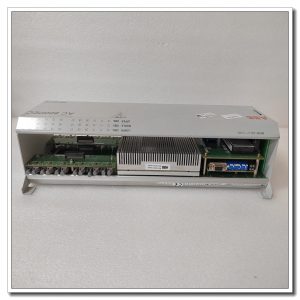
‑ Mechanical Structure:Rack plug‑in single‑width module for Symphony Plus HR rack;overall weight approx 0.50kg
‑ On‑board Resources:High‑performance ColdFire processor, expanded RAM & flash memory, lithium backup battery, INFI‑NET ring circuit, Harmony Expander bus controller, 10/100Mbps Modbus‑TCP Ethernet interface, comprehensive hardware self‑diagnosis circuit
‑ Communication Interface:INFI‑NET dual‑ring coaxial interface; Harmony Expander back‑plane bus; independent RJ45 Ethernet port for Modbus‑TCP communication
‑ Galvanic Isolation:Transformer isolation between INFI‑NET ring‑network side and rack internal bus side; Ethernet port isolation, restrain external industrial interference entering control rack.
‑ Core Function:Execute DCS function‑block algorithm, PID closed‑loop control, sequence & interlock logic; manage local Harmony I/O, remote I/O and S800 I/O; INFI‑NET ring data interaction; Modbus‑TCP third‑party device communication; hardware self‑diagnosis, fault alarm upload; lithium battery backup for configuration and RTC clock.
‑ Protection:Module internal over‑temperature, over‑current monitoring protection.
‑ Status LED Indicators:Run LED, fault LED, INFI‑NET Ring A / Ring B communication LED, battery low‑voltage alarm LED, Ethernet link/activity LED.
‑ Weight:approx 0.50kg
‑ SPBRC410 is upgraded bridge controller of Symphony Plus HR series, compared with SPBRC400, adds native Modbus‑TCP Ethernet interface, simplifies access for third‑party intelligent equipment, compatible with INFI90 / Harmony legacy hardware for system renovation upgradeABB Group. Two SPBRC410 modules support 1:1 hot‑standby redundancy, master‑standby bumpless switchover upon main controller failure, no disturbance to field control output.
‑ Real‑time run PID, logic interlock, calculation, batch sequence control function blocks. Collect data from local rack, remote I/O sub‑rack and S800 I/O; send control command to I/O modules. Realize bidirectional data exchange with whole‑plant DCS through INFI‑NET dual‑ring; meanwhile via Modbus‑TCP port communicate with outside PLC, protection IED and 800xA system. Upload process value, alarm and event messages, receive configuration download from engineering workstation.
‑ On‑board lithium battery backs up user configuration and real‑time clock under power‑off condition; low‑battery alarm reminds periodic battery replacement. Comprehensive self‑diagnosis covers processor, memory, INFI‑NET ring link, Ethernet communication, battery health; fault status upload to DCS operator station.
‑ Installed on Symphony Plus HR standard control rack, cannot run independently, must match INIIT series network termination module, various I/O modules and terminal units.
Difference compared with SPBRC400:SPBRC400 without native Ethernet port; SPBRC410 integrates Modbus‑TCP Ethernet interface, supports S800 I/O subsystem, stronger third‑party device integration capabilityABB Group.
‑ Execute full set of process control algorithm including PID, logic interlock, sequence and batch control for control station.
‑ Manage Harmony local / remote I/O and S800 I/O data; complete bidirectional data interaction over INFI‑NET ring and Modbus‑TCP Ethernet.
‑ Monitor module hardware, dual‑ring network, Ethernet link and backup battery status, upload fault alarm information to DCS system.
‑ Back‑plane:Rack internal Harmony Expander back‑plane bus for I/O data exchange and module power supply.
‑ External interfaces:INFI‑NET Ring A / Ring B coaxial ring‑network interfaces; RJ45 Ethernet port for Modbus‑TCP communication.
‑ Mounting:Plug‑in installation on Symphony Plus HR standard rack
‑ Operating Temperature:‑20 ℃ ~ +60 ℃
‑ Storage Temperature:‑40 ℃ ~ +85 ℃
‑ Relative Humidity:5‑95 %RH, non‑condensing
‑ Pollution degree:Degree 2
‑ Protection Class:IP20, cabinet‑internal installation.
- SPBRC410 bridge controller(SPBRC41000000)
Complementary parts: Symphony Plus HR control rack, INIIT network termination module, Harmony I/O modules & terminal units, S800 I/O system (optional), INFI‑NET coaxial cable, shielded Ethernet cable, system power supply, operator & engineering workstation.
‑ Insert module into controller dedicated slot of HR rack, tighten front‑panel locking knob to guarantee reliable back‑plane contact.
‑ For redundant configuration, two SPBRC410 need correct master‑standby setting; lithium battery will age, replace battery periodically to avoid configuration loss after power‑off.
‑ Module replacement recommends power‑off operation. After replacement, download full station configuration, verify controller running status, INFI‑NET dual‑ring communication, Modbus‑TCP communication, I/O acquisition and control output normal.
‑ Strictly distinguish Ring A and Ring B coaxial wiring; Ethernet wiring adopt shielded cable, separate from high‑voltage power cable to reduce interference.
Power plant, petrochemical, pulp‑and‑paper industry Symphony Plus DCS control cabinets; high‑performance main‑station bridge controller spare‑part, applicable for scenarios needing access third‑party Modbus‑TCP equipment and S800 I/O subsystem.
- ABB Symphony Plus SPBRC410 bridge controller with Modbus‑TCP interface (SPBRC41000000), upgraded core processing unit for Symphony Plus HR‑series DCSABB Group.
- Powerful function‑block execution capacity, support Harmony I/O and S800 I/O simultaneously; native Modbus‑TCP Ethernet port, convenient for third‑party device integration.
- Support 1:1 hot‑standby redundant bumpless switchover; access INFI‑NET dual redundant ring network; lithium battery backup for configuration and real‑time clock; abundant hardware and link self‑diagnosis, low‑battery alarm function.
- Rack plug‑in single‑width structure, cabinet‑internal IP20 application, fully compatible with legacy INFI90 / Harmony hardware for system upgrade renovation.
- Undertake station whole‑set control algorithm calculation, multi‑type I/O management, INFI‑NET ring and Modbus‑TCP Ethernet data interaction. Upgraded version of SPBRC400.
- Discontinued legacy DCS spare‑part, used for old‑system maintenance and retrofit projects。
Reviews
There are no reviews yet.