

Description

Core performance features
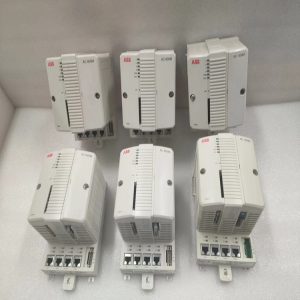
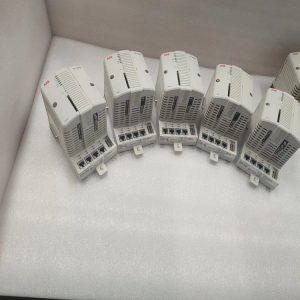
DIN‑rail mounting structure, 16‑channel signal terminals, maximum rated voltage 50 V, single‑channel allowable current up to 2 A. Spring‑clamp terminal blocks accept solid and stranded wires, good anti‑vibration performance for cabinet environment. Built‑in ModuleBus cascading circuit, realizing bus signal transfer between multi‑groups of I/O bases. Mechanical coding keys prevent mismatched insertion of different I/O modules, lowering on‑site assembly mistakesABB. It is a purely passive hardware without processor or power circuit. Working temperature: horizontal installation 0‑55℃, vertical installation 0‑40℃, IP20 protection level, only for cabinet‑internal useABB. Compatible with multiple S800 series I/O cards: analog input, analog output, digital input and digital output modules such as DI810, AI810, AO810 etcABB. When I/O card is pulled out, all field wiring stays fixed on this base.
On‑site application scenarios
Commonly deployed in chemical, paper‑making and power‑plant DCS cabinets, matched with AC800M controller’s S800 distributed I/O stations. Field instruments connect to this termination base, then corresponding I/O cards plug on top of it. When I/O hardware fails, operators can replace the card directly, no need to re‑terminate field cables, shorten equipment maintenance downtime. It is widely used in new‑project cabinet construction and spare‑part stocking for old‑system renovation. Multiple TU810V1 can be cascaded on one DIN‑rail to expand I/O point quantity.
Installation & operating notes
Mount firmly on standard 35 mm DIN‑rail, confirm the locking buckle is clipped in place. Arrange field signal cables reasonably, separate them from high‑power power cables to reduce electromagnetic interference. Tighten spring‑clamp terminals properly to avoid poor contact caused by long‑term vibration. Adjust mechanical coding keys according to the actual I/O card type, avoid wrong mechanical match. Since the base itself is passive, fault investigation should focus on external wiring and upper‑plugged I/O module. Do not modify internal bus contact structure on‑site. Replace the whole termination base when bus contact spring is deformed or severely oxidized.
Common field phenomena & disposal thoughts
- I/O channel signal loss: Check whether field wire is firmly clamped in spring terminal. Inspect terminal corrosion or oxidation. Swap channel position for comparison to distinguish between field instrument fault and base contact problem.
- ModuleBus communication failure among cascaded stations: Check the inter‑unit bus contact between adjacent TU810V1 bases. Confirm DIN‑rail mounting is not loose. Clean bus contact springs if dust accumulates.
- Unable to insert I/O card smoothly: Check position of mechanical coding keys. Foreign debris inside slot will also block module insertion.
- Intermittent signal jumping: Re‑check terminal clamping force. Eliminate nearby interference source. Verify whether cabinet temperature exceeds allowable limit for vertical installation.
Reviews
There are no reviews yet.