

Description
Hardware & Electrical Specifications
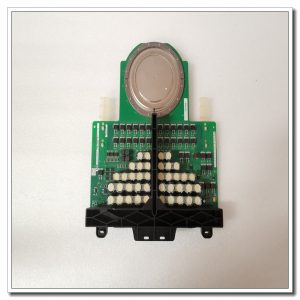
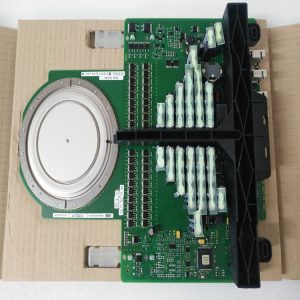
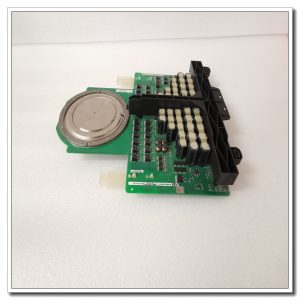
- Model:UAC389AE02
- Part Number:HIEE300888R0002
- Module Type:Enhanced Measurement Unit Board
- Bus Interface:6U VME back‑plane bus for high‑speed data interaction with main processor
- Analog Input:Multi‑channel galvanic‑isolated analog input for generator voltage and current signals
- Binary Input:Multi‑channel isolated binary status input for cabinet interlock and auxiliary signals
- On‑board Resource:Optimized signal conditioning circuit, high‑resolution A/D converter, hardware fault‑monitoring logic
- Power supply:24 V DC internal cabinet power supply
- Max power consumption:14 W
- Galvanic isolation:≥2500 V AC between field signal side and VME logic side
- Dielectric strength:2500 V AC 1 minute
- Insulation resistance:>100 MΩ @ 500 V DC
- On‑board protection:Surge suppression for each input channel, ESD protection, over‑range monitoring, conformal coated PCB
- Compatibility note:Must match UNITROL6000 full‑system firmware; backward replacement for UAC383AE01 requires firmware confirmation; cannot run standalone.
Environmental Specifications
- Operating temperature:‑10 ℃ ~ +60 ℃
- Storage temperature:‑40 ℃ ~ +85 ℃
- Relative humidity:5%‑95% non‑condensing
- Protection degree:Installed inside excitation cabinet VME rack
- EMC compliance:IEC 61000‑6‑2 industrial electromagnetic immunity standard
- Certifications:CE
Mechanical Data
- Installation:Standard 6U VME Euro‑card, inserted into VME rack slot of excitation cabinet
- Interfaces:VME back‑plane gold‑finger connector; terminal block connectors for analog and binary signal wiring
- Suitable wire cross‑section:0.75 mm²‑2.5 mm² copper cable for signal terminals
- Terminal tightening torque:0.6‑1.0 N·m
- Dimension:6U VME standard board
- Weight:approx 0.76 kg
Main Functions
- High‑precision multi‑channel analog signal acquisition & conditioning: Collects generator PT voltage and CT current signals, completes filtering, isolation and signal conditioning before A/D conversion.
- High‑resolution A/D conversion: Converts conditioned analog signals into digital measured values, delivers data to main processor for AVR closed‑loop regulation, limitation and protection calculation.
- Binary interlock‑signal processing: Acquires cabinet auxiliary contact status, converts field dry‑contact signals into digital logic for excitation interlock protection and sequence control.
- Real‑time measurement data transmission: Uploads analog measured values and binary status data to main processor through VME back‑plane bus.
- Rich input‑channel fault diagnosis: Detects analog signal loss, over‑range, channel abnormal and binary‑input failure, reports detailed fault codes to system.
- Board‑level comprehensive self‑diagnosis: Monitors on‑board power supply, A/D conversion unit and hardware logic status, uploads hardware fault alarm to UNITROL6000 system.
- On‑board multi‑LED status indication
- Green LED:Board power supply normal, board logic running healthy
- Yellow LED:Signal acquisition active, VME data transmission ongoing
- Red LED:Input‑channel fault / board hardware fault alarm
Installation & Wiring Requirements
- Cut off cabinet total power before disassembly and assembly. Insert UAC389AE02 into designated VME rack slot, lock front‑panel handles firmly. Hot‑swap is strictly forbidden.
- Connect generator measurement analog cables and cabinet binary‑signal cables to corresponding terminal blocks; strictly follow excitation cabinet wiring specification; separate high‑power cables and weak‑signal cables to reduce electromagnetic interference.
- Cabinet protective grounding must comply with ABB AC800‑PEC / UNITROL6000 system grounding specification.
- After replacement, verify full‑system firmware compatibility with main processor board; download matched project parameters; perform analog‑channel calibration and binary‑input function test before unit commissioning.
- Replacement note: When replacing old UAC383AE01 board, confirm full‑system firmware version supports UAC389AE02; cannot operate independently, must cooperate with PPC‑series main‑processor hardware.
Reviews
There are no reviews yet.