Description
Hardware & Electrical Specifications
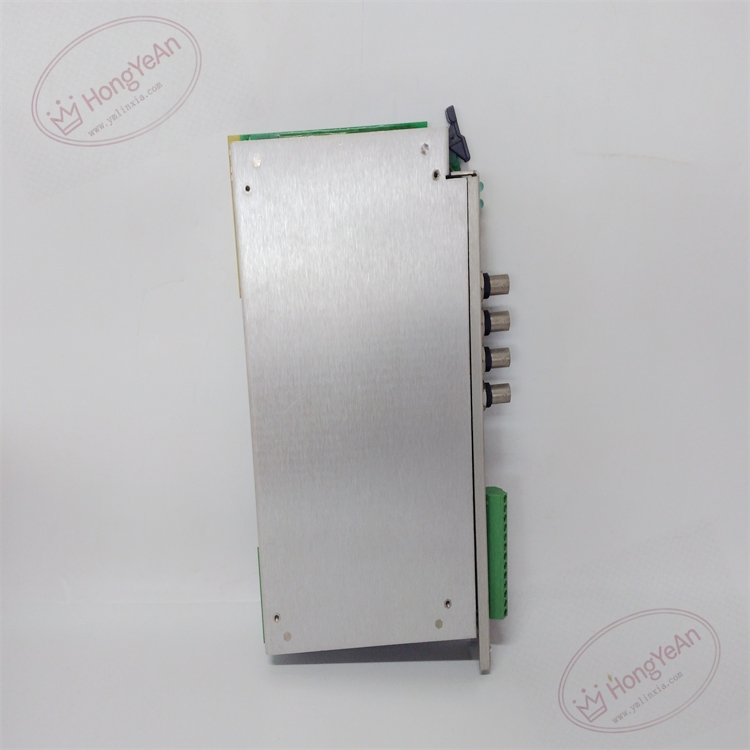
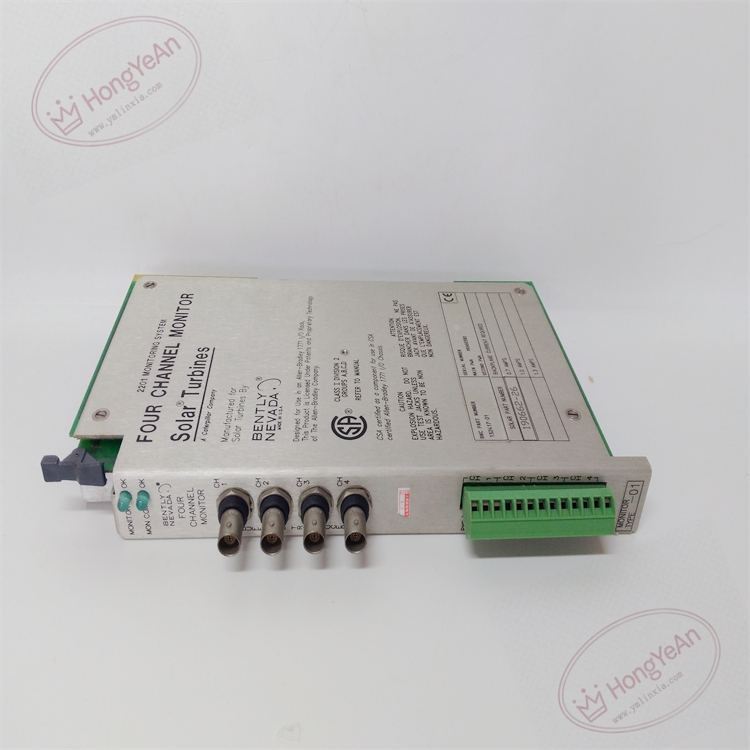
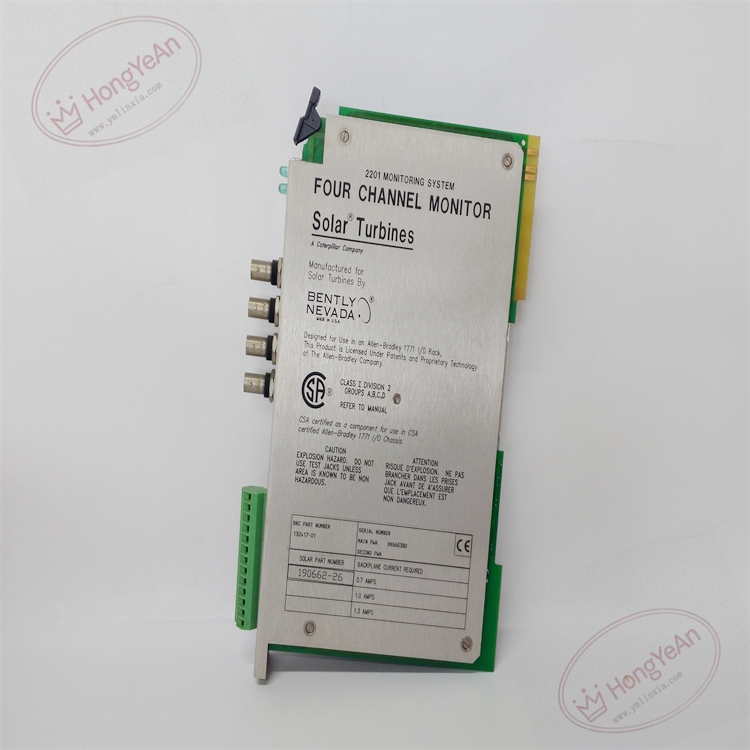
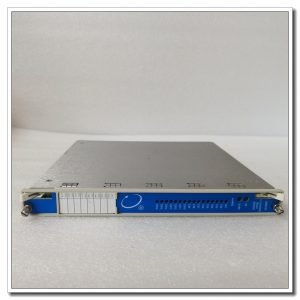
‑ Manufacturer: Bently Nevada (Baker Hughes), co‑designed for Solar Turbines ‑ Device Type: Four‑Channel Seismic Vibration Monitor Module ‑ Input Channels: 4 independent seismic sensor input channels ‑ Supported Transducers: Accelerometers, Velomitor velocity transducers ‑ Sensor Excitation: Built‑in constant‑current excitation for seismic sensors ‑ Input Frequency Range: 5‑1000 Hz ‑ Front‑side Interface: Four BNC connectors for dynamic vibration signal input ‑ Rear‑side Termination: Screw‑type terminal blocks for relay alarm outputs and 4‑20 mA analog outputs ‑ Power Supply: 18‑30 V DC ‑ Typical Power Consumption: 11 W ‑ Mounting: Dedicated rack‑slot installation ‑ PCB Treatment: Conformal‑coated printed‑circuit board ‑ Operating Temperature: ‑30 ℃ ~ +65 ℃ ‑ Storage Temperature: ‑40 ℃ ~ +85 ℃ ‑ Certifications: CE, compliant with API‑670 machinery‑protection requirements
Environmental Specifications
‑ Relative Humidity: 5%‑95 %, non‑condensing ‑ Vibration Resistance: Complies with industrial cabinet mechanical vibration requirements ‑ EMI Immunity: On‑board signal filtering suppresses conducted noise induced by power cables and variable‑frequency‑drive circuits
Core Functions
- Multi‑channel seismic signal acquisition: Receives casing vibration dynamic signals from four accelerometer or Velomitor sensors for gas‑turbine casing vibration measurement.
- Signal conditioning and filtering: Realizes band‑pass filtering, signal integration and amplitude calculation for raw vibration signals.
- Alarm & trip logic processing: Supports configurable alert / danger threshold settings; drives internal relay outputs for remote alarm and protection interlock signals.
- Analog signal conversion: Converts vibration amplitude values into 4‑20 mA analog outputs for DCS and host monitoring system acquisition.
- Local status indication: Front‑panel LED indicators display channel OK, alert and danger status for on‑site troubleshooting.
Installation, Replacement & Critical Warnings
- This monitor module is non‑hot‑swappable. Cut off rack DC power supply before inserting or removing the module.
- Compatibility warning: ‑ This is a Solar‑Turbines‑customized module; it is specially used for gas‑turbine casing vibration monitoring and cannot be mixed with ordinary 3500 series monitor modules. ‑ Configure sensor type, filter parameters and alarm setpoints according to the unit original configuration parameters. ‑ Vibration signal cables shall be routed separately from high‑voltage power cables to avoid electromagnetic noise distorting dynamic vibration signals. ‑ Tighten BNC connectors and rear‑side terminal screws reliably; avoid loose contacts causing signal interruption. ‑ Take ESD anti‑static protection measures when handling the module.
- Post‑replacement commissioning and verification: ‑ Confirm the module is fully inserted into the rack slot and locked firmly. ‑ Power on the rack; check front‑panel LED status, no hardware fault alarm under normal condition. ‑ Inject simulated vibration signal for each channel, verify amplitude readings respond correctly to signal variation. ‑ Simulate threshold crossing, verify relay alarm action and 4‑20 mA analog output change normally. ‑ Under gas‑turbine running conditions, confirm casing‑vibration readings keep stable without jitter or drifting.
Common Failure Modes and Symptoms
‑ Rack slot contact degradation: Intermittent signal dropout, unstable vibration readings, sporadic fault alarms. ‑ BNC connector loose or damaged: Signal loss, zero‑reading or large‑amplitude jitter. ‑ Rear‑terminal poor contact: Relay cannot act normally, abnormal 4‑20 mA output. ‑ Wrong sensor‑type or filter‑parameter configuration: Severe measurement offset without hardware‑fault alarm. ‑ Electromagnetic interference: Vibration data jitter under unit operating status.
Reviews
There are no reviews yet.