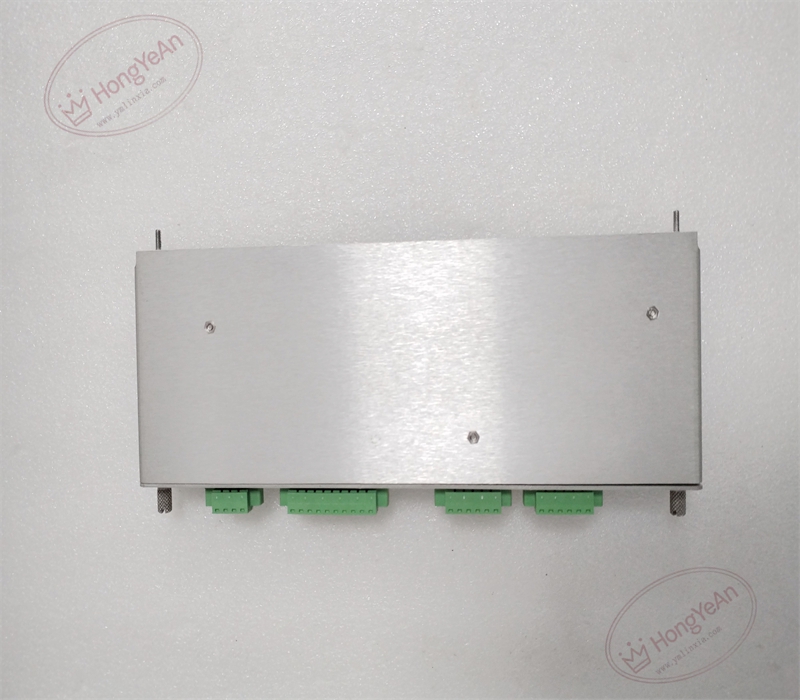
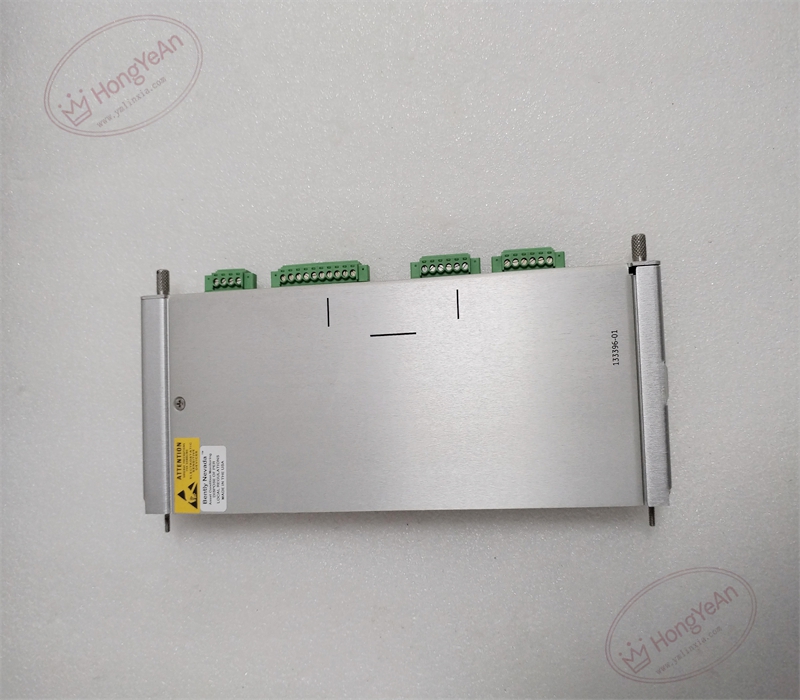
Description
Hardware & Electrical Specifications
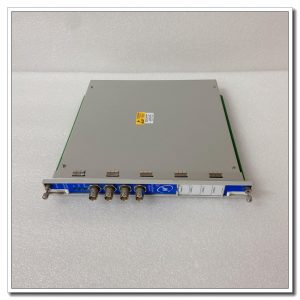
‑ Manufacturer: Bently Nevada (Baker Hughes) ‑ Device Type: Internal‑Termination Rear I/O Module for 3500/53 Overspeed Monitor ‑ Input Channels: 2 independent overspeed pulse input channels ‑ Supported Sensors: Magnetic pickup sensors, proximity‑type keyphasor probes ‑ Proximity Probe Excitation:‑24 Vdc regulated power supply ‑ Input Impedance: Minimum 21.8 kΩ per channel ‑ Input Frequency Range: 0‑10 kHz ‑ Termination: Screw‑type terminal blocks for direct field‑site wiring ‑ Backplane Interface: 3500 proprietary backplane connector mating with front‑side 3500/53 module ‑ Typical Power Consumption: 4.2 W ‑ Mounting: Full‑height dedicated rear slot inside 3500‑series rack chassis ‑ PCB Treatment: Conformal‑coated printed‑circuit board ‑ Operating Temperature: ‑30 ℃ ~ +65 ℃ ‑ Storage Temperature: ‑40 ℃ ~ +85 ℃ ‑ Certifications: CE, CSA, ATEX hazardous‑area approvals, API‑670 compliant
Environmental Specifications
‑ Relative Humidity: 5%‑95 %, non‑condensing ‑ Vibration Resistance: Complies with industrial cabinet mechanical vibration requirements ‑ EMI Immunity: On‑board filtering suppresses electromagnetic interference induced by power cables and variable‑frequency‑drive circuits
Core Functions
- Overspeed‑sensor field termination: Provides screw terminals for direct field wiring of dual‑channel overspeed pulse sensors for turbine overspeed protection.
- Transducer excitation feeding: Supplies‑24 Vdc excitation power for proximity‑type overspeed keyphasor probe assemblies.
- Pulse‑signal conditioning: Processes raw shaft‑mark pulse signals and forwards conditioned overspeed events to front‑side 3500/53 monitor module through rack backplane bus.
- Hardware overspeed‑trip support: Cooperates with front‑panel 3500/53 module to implement high‑speed independent overspeed‑trip logic, fast response for critical machinery protection.
- Transducer loop diagnostics: Continuously detects open‑circuit and short‑circuit faults on each channel, reports loop‑fault status to front‑panel monitor for system alarming.
Installation, Replacement & Critical Warnings
- This rear I/O module supports hot‑swap. Rack main power can remain energized for module replacement, but disconnect field sensor wiring before modifying terminal connections.
- Compatibility warning: ‑ Strictly matched with front‑side 3500/53 overspeed‑detection monitor module; cannot pair with other 3500‑series monitor modules. ‑ Configure sensor type, overspeed trip setpoint and filter parameters in 3500 configuration software strictly according to original unit parameters. ‑ Overspeed pulse signal cables shall be routed separately from high‑voltage power cables to avoid electromagnetic noise distorting pulse signals. ‑ Tighten terminal‑block screws to proper torque to prevent loose‑contact‑caused signal interruption. ‑ Inspect backplane connector pins for bending, debris and corrosion before inserting module into rear slot.
- Post‑replacement commissioning and verification: ‑ Confirm module is fully seated in rear dedicated slot and backplane connection is reliable. ‑ Check front‑panel status LED of paired 3500/53 module; no hardware‑fault or loop‑fault indication under normal condition. ‑ Inject simulated pulse signal to each channel, verify shaft‑speed reading responds correctly to pulse‑frequency variation. ‑ Simulate sensor open‑circuit and short‑circuit conditions, confirm corresponding loop‑fault alarm triggers properly. ‑ Under unit running conditions, verify stable shaft‑speed reading and reliable overspeed‑protection logic.
Common Failure Modes and Symptoms
‑ Backplane contact degradation: Intermittent loss of overspeed pulse signal, unstable speed readings, sporadic module‑fault alarms. ‑ Terminal‑block damage or loose wiring: Intermittent signal dropout, zero‑speed reading or speed‑value jumping. ‑ Mismatched front‑side main module: 3500/53 reports I/O‑mismatch fault, both overspeed input channels become disabled. ‑ Improper sensor gap or insufficient pulse amplitude: Speed‑measurement deviation without hardware‑fault alarm. ‑ Electromagnetic interference: Pulse‑signal distortion, speed‑reading jitter under machine operating status.
-300x300.jpg)
Reviews
There are no reviews yet.