Description
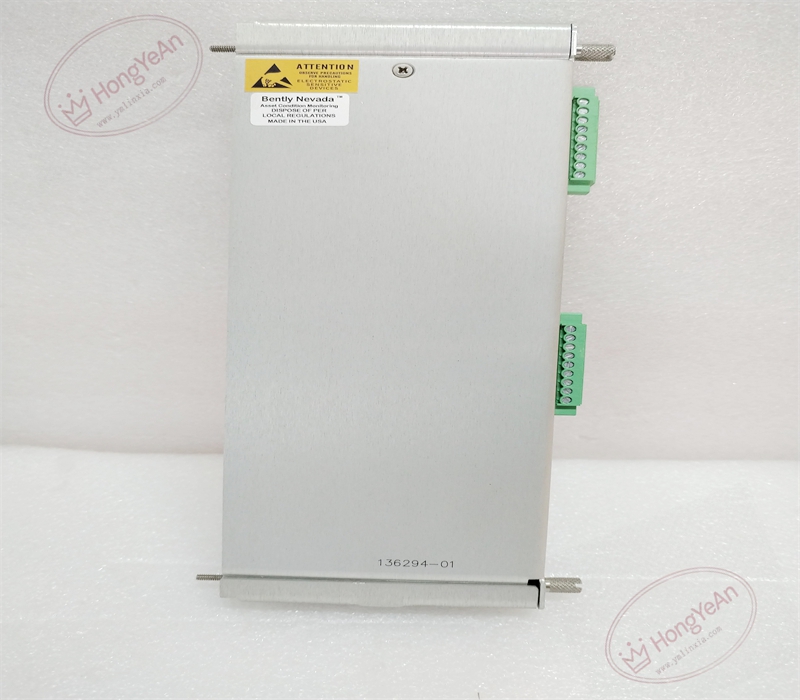
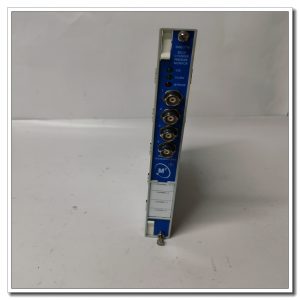
Bently Nevada 136294‑01 (62 Small Card)
Official Product Name: 6‑Channel Isolated 4‑20mA Rear I/O Small Card
Product Brief: This rear I/O small card is purpose‑built for the 3500‑62 process variable monitor inside the 3500 TSI machinery‑protection rack. It adopts built‑in galvanic isolation and onboard internal screw terminals for six‑channel 4‑20 mA analog transmitter field wiring. It isolates field‑side process‑transmitter loops from rack internal backplane circuits, routes analog process variable signals to the front‑end 3500‑62 module for pressure, flow and liquid‑level measurement. It must be installed one‑to‑one behind the matched 3500‑62 front‑end monitor module and cannot perform any measurement functions as a standalone unit.
Hardware Specifications
- Part Type: Rear I/O small card with channel‑to‑channel galvanic isolation, dedicated pairing for 3500‑62 front‑end process variable monitor, standalone operation is invalid
- Mounting: Rear slot position of 3500‑05 rack, front‑rear paired‑slot architecture, directly mounted behind 3500‑62 front‑end monitor module
- Termination: On‑board built‑in screw‑type field terminals; external terminal adapter is not required, supports six‑channel 4‑20 mA analog current input loops
- Isolation Performance: Each channel provides independent galvanic isolation between field transmitter side and rack backplane side, reducing ground‑loop interference introduced by distributed field transmitters
- PCB: Conformal‑coated multi‑layer FR‑4 PCB, provides anti‑corrosion protection for long‑term operation inside oily, dusty industrial cabinet environments
- Mechanical Form: Standard 3500‑series rear small‑card footprint; net weight approx. 0.44 kg; fits standard rear full‑height slot dimension
- Environmental Ratings: Operating temperature −30 °C ~ +65 °C; storage temperature −40 °C ~ +85 °C; relative humidity 5‑95 % non‑condensing; vibration and shock performance complies with API‑670 machinery‑protection industry standard
- Electrical Characteristics: Powered entirely via rack backplane 5 VDC supply; no local CPU, signal‑conditioning chip or alarm‑judgment circuit. All analog signal sampling, range configuration, alarm / danger threshold setup and channel diagnostic processing are fully executed on the 3500‑62 front‑end monitor module. This rear card only completes isolated hardware‑level signal routing between rack internal backplane traces and external field 4‑20 mA transmitter loops. Does not supply loop power to field transmitters; external 4‑20 mA loop power shall be provided by site‑side field power supply units.
- Input Signal Range: Accepts standard industry 4‑20 mA current analog signals from two‑wire or four‑wire process transmitters.
Core Functions
- Acts as physical field‑wiring interface for 3500‑62 process variable monitor. Receives six‑channel 4‑20 mA analog output signals from field pressure transmitters, flow transmitters, level transmitters and other process instruments, and transmits isolated current signals to paired front‑end processing module for analog‑digital conversion.
- Independent channel‑level galvanic isolation suppresses common‑mode noise and eliminates ground‑loop interference which frequently occurs among multi‑point distributed field transmitters, improving stability of process‑variable measurement values.
- Supports continuous monitoring of critical rotating‑machine auxiliary‑process parameters including compressor suction‑discharge pressure, lube‑oil pressure, process flow and tank liquid‑level. All channel type selection, measurement range definition and alarm logic configuration are completed within 3500 rack configuration software on front‑end module; this rear I/O hardware does not participate in parameter computation.
- No local decision‑making or diagnostic logic. All transmitter fault detection, signal over‑range / under‑range identification and fault‑code generation are processed by 3500‑62 front‑end monitor. Fault status information will be uploaded to the 3500 system host and recorded in system event log for operator troubleshooting review.
- Widely deployed in steam‑turbine, gas‑turbine and centrifugal‑compressor TSI protection systems. Realizes integration of process‑variable signals into the machinery‑protection platform, enables interlock‑trigger conditions based on process‑parameter deviations, complements traditional vibration and position protection functions. Distinguished from 137110‑01 barrier‑type small card, this variant provides galvanic isolation without intrinsic‑safety energy‑limiting circuits for hazardous‑area applications.
Installation Requirements
- Strict one‑to‑one slot‑pairing requirement: this rear small card must be inserted in the rear slot directly behind a 3500‑62 front‑end process‑variable monitor module. Mismatched front‑rear part numbers or misaligned slot positions will cause channel reading anomalies, signal isolation failure or complete loss of analog input channels.
- Power‑off operation rule for rear‑card replacement: although front‑end modules support hot‑swap function, rear‑side I/O small‑card insertion / extraction must be performed with the entire 3500 rack powered down. Live‑swap of rear card may generate backplane bus transient noise, induce transient current disturbance on 4‑20 mA loops, produce temporary jump of measured values and trigger false alarm events on 3500 system and upper‑level DCS.
- Field‑loop wiring specification enforcement: use shielded twisted‑pair cables for all 4‑20 mA field instrument wiring. Cable shielding layers shall implement single‑end grounding at control‑system cabinet ground bar. Instrument cables must be physically separated from high‑voltage AC power cables and large‑current motor cables to suppress electromagnetic interference. Confirm external loop power polarity matches terminal definition, reverse‑polarity connection will lead to channel non‑response. Apply proper torque for screw terminals; loose terminal connections will produce measurement drift, intermittent signal jumping and spurious alarms.
- Cabinet environmental control: maintain sufficient cabinet forced‑air ventilation and temperature control. Prevent oil mist, corrosive gas, conductive dust and moisture condensation inside cabinet space. Contamination accumulation on PCB traces and connector pins will produce high‑resistance contact points and degrade long‑term measurement stability and isolation performance.
- Pre‑installation visual inspection: carefully inspect backplane edge‑connector pins before inserting the small card. Check for bent pins, mechanical deformation, corrosion, oil contamination and foreign‑object debris. Damaged or contaminated backplane contacts will result in partial‑bit data corruption, sporadic non‑reproducible measurement faults difficult to locate during routine maintenance.
- Part‑number cross‑version distinction: 136294‑01 is internal‑termination isolated 4‑20 mA I/O small card; 136483‑01 is external‑termination isolated 4‑20 mA variant; 137110‑01 integrates intrinsic‑safety barrier circuits for hazardous‑location field loops. These variants are not interchangeable on‑site; mixing‑up will cause loss of isolation or intrinsic‑safety certification failure.
Common Failure Modes
‑ Terminal oxidation or crimp degradation: intermittent process‑value jump, floating measurement readings, random under‑range / over‑range channel alarms. ‑ Backplane edge‑connector pin mechanical damage, bent or corroded contacts: partial or total loss of analog input channels, abnormal isolated‑channel performance. ‑ Conformal‑coating scratch, PCB trace corrosion induced by oil mist or chemical vapor: individual signal‑trace open‑circuit or short‑circuit inside PCB substrate, degradation of galvanic‑isolation dielectric performance. ‑ ESD electrical overstress damage during field handling: internal PCB signal‑trace micro‑fracture or subtle copper‑layer damage without obvious exterior physical damage; manifests as unstable measurement performance after cabinet internal thermal temperature cycling. ‑ Mechanical damage caused by improper insertion force: edge‑connector pin offset, internal fine‑trace cracking; measurement channel failure occurs when equipment suffers cabinet‑base vibration.
Reviews
There are no reviews yet.