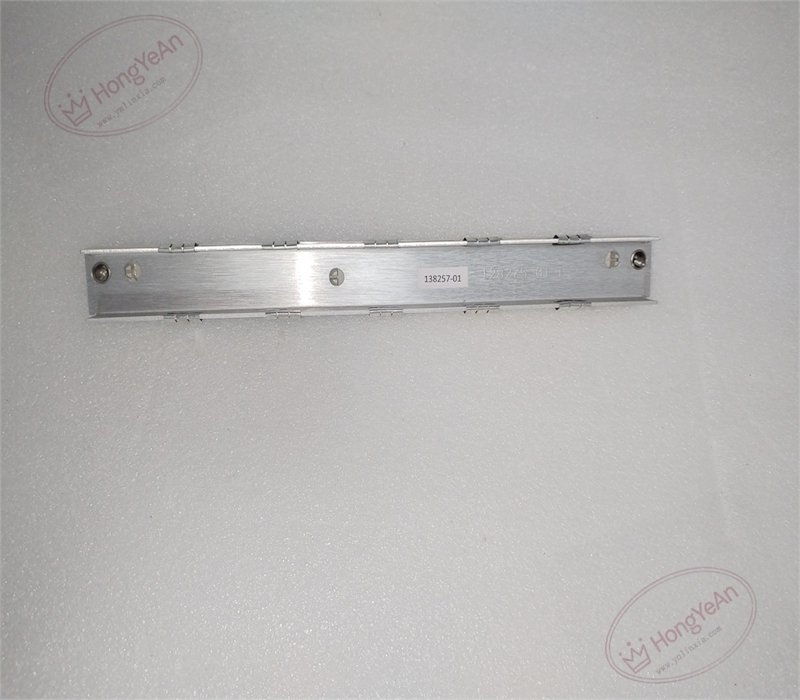
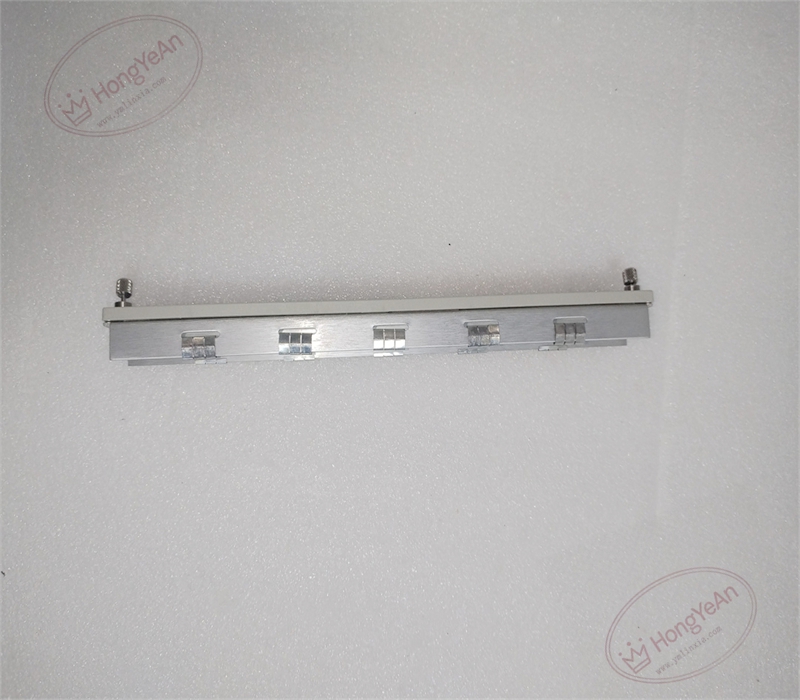
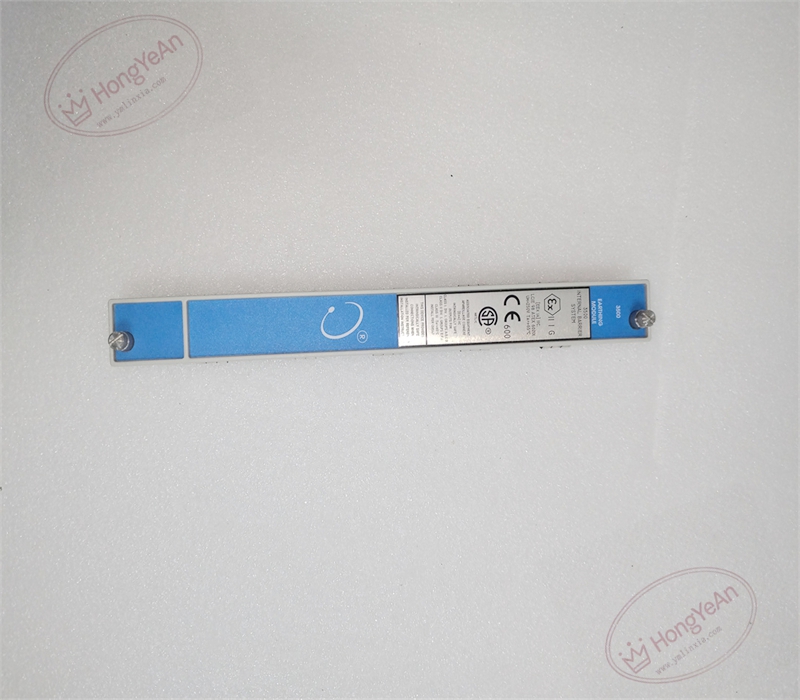
Description
Hardware Specifications
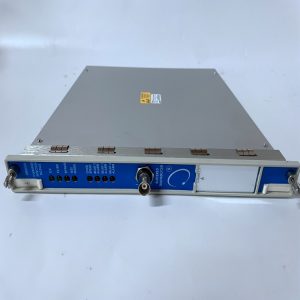
- Part Type: Front‑panel indicator assembly for intrinsic‑safety ground system, dedicated matching for 136719‑01 IS ground rear I/O small card, standalone operation invalid
- Mounting: Standard full‑height front slot of 3500‑05 rack, occupies front‑side slot position corresponding to 136719‑01 rear small‑card
- Indicator: Front‑mounted LED status indicator for intrinsic‑safety ground‑path health monitoring; printed part number and safety warning marking on faceplate
- Mechanical Form: Standard 3500‑series front module faceplate footprint; net weight approx. 0.22 kg; fits standard full‑height front slot dimension
- PCB: Conformal‑coated small‑size FR‑4 indicator PCB integrated inside metal faceplate housing
- Environmental Ratings: Operating temperature −30 °C ~ +65 °C; storage temperature −40 °C ~ +85 °C; relative humidity 5‑95 % non‑condensing; vibration and shock performance complies with API‑670 machinery‑protection industry standard
- Electrical Characteristics: Powered via rack backplane 5 VDC supply; no ground‑bonding power circuit on this front panel. It only samples backplane IS ground‑path status signal transmitted from 136719‑01 rear small‑card and drives front‑panel LED indication. All low‑resistance intrinsic‑safety ground‑bonding physical circuits are completely implemented on rear‑side 136719‑01 small‑card hardware. This front‑panel assembly has no capacity to provide intrinsic‑safety ground reference by itself.
Core Functions
- Provides front‑of‑rack visual status indication for intrinsic‑safety ground reference circuit implemented by 136719‑01 rear small‑card. Operators can directly judge IS ground‑path integrity status via front‑panel LED without opening cabinet rear door for rear‑card inspection.
- Samples ground‑loop impedance status signal from rack backplane. When intrinsic‑safety ground path exceeds allowed resistance threshold, front‑panel LED changes state, meanwhile diagnostic fault code will be uploaded to 3500 system event log. This reminds maintenance personnel to inspect IS ground bus bar, field grounding wiring and rear‑card terminal connection conditions.
- Carries permanent printed safety warning labels and part‑number identification on metal faceplate. Remains visible for field inspectors to confirm that this rack is configured for intrinsic‑safety hazardous‑area transducer deployment, prevents incorrect hardware replacement during routine maintenance work.
- No local ground‑bonding, signal‑processing or logic‑judgment function. All actual low‑resistance equipotential bonding work is completed by paired 136719‑01 rear I/O small‑card. Front‑panel only acts as status display terminal; fault diagnosis logic is distributed among barrier‑equipped monitor modules across the whole rack.
- Applied for steam‑turbine, gas‑turbine and centrifugal‑compressor TSI protection systems within petrochemical and oil‑gas plants. Works cooperatively with 3500‑40M, 3500‑42M, 3500‑50M and other internal‑barrier monitor modules. Forms complete intrinsic‑safety grounding indication solution together with rear‑side ground small‑card, ensuring safety certification validity for field sensors installed inside explosive classified zones.
Installation Requirements
- Strict front‑rear slot pairing requirement: this front‑panel assembly must be inserted into front‑side slot directly in front of 136719‑01 IS ground rear small‑card. Mismatched front‑rear slot positions will result in loss of LED status indication, and operators cannot obtain real‑time visual feedback for intrinsic‑safety ground‑path faults.
- Power‑off operation rule for replacement: although most front‑end monitor modules support hot‑swap function, insertion / extraction of this IS ground front‑panel assembly should be performed with entire 3500 rack powered‑down. Live‑swap may produce transient disturbance on backplane IS ground‑status sampling signal, trigger temporary false ground‑fault indication.
- Cabinet environmental control: maintain sufficient cabinet forced‑air ventilation and temperature control. Prevent oil mist, corrosive gas, conductive dust and moisture condensation on front‑panel LED window and internal indicator PCB. Contamination accumulation will cause LED dimming, blurred observation and internal indicator‑circuit corrosion.
- Pre‑installation visual inspection: inspect backplane connector pins before inserting front‑panel assembly. Check for bent pins, mechanical deformation, oil contamination and corrosion. Damaged backplane contacts will lead to missing ground‑status sampling signal, front‑panel LED keeps dark or stays abnormal state without real‑time fault response.
- Part‑number cross‑version distinction: 138257‑01 is exclusive front‑indicator panel for 136719‑01 IS ground rear small‑card. It cannot substitute ordinary monitor front‑faceplate; non‑IS rack configurations do not require this hardware assembly. Mix‑matching different part‑number front‑rear combination will lose visual monitoring capability for intrinsic‑safety ground‑path health.
Common Failure Modes
‑ Internal indicator PCB trace oxidation or component degradation: LED dim, flickering or permanent dark, operator loses front‑side visual ground‑fault warning channel, while rear‑side IS ground‑bonding physical circuit may still keep normal. ‑ Backplane edge‑connector pin mechanical damage, bent or corroded contacts: loss of ground‑status sampling signal, front‑panel LED maintains fixed abnormal state, cannot reflect real variation of intrinsic‑safety ground‑loop resistance. ‑ Conformal‑coating scratch and PCB corrosion induced by oil mist or chemical vapor: open‑circuit or short‑circuit of internal indicator signal traces, front‑panel indication function fails completely, while rear‑side ground‑bonding hardware still operates normally. ‑ ESD electrical overstress damage during field handling: micro‑fracture of fine PCB traces without obvious exterior damage; manifests as unstable LED performance under cabinet temperature cycling and vibration conditions. ‑ Mechanical damage caused by improper insertion force: edge‑connector pin offset, internal fine‑trace cracking; indication function fails after cabinet‑base vibration events.
-300x300.jpg)
Reviews
There are no reviews yet.