Description
Detailed Technical Specifications
- Signal Acquisition Capacity: Supports multi-channel vibration, speed, position and temperature sensor inputs; compatible with proximity probes, velocity sensors, accelerometers and RTD/TC temperature sensors. Adopts 24-bit ADC high-precision sampling, measurement accuracy up to ±1% FS.
- Frequency & Speed Range: Dual configurable filter groups: 4–4000 Hz (240–240000 RPM) and 1–600 Hz (60–36000 RPM), adaptable to low-speed and high-speed rotating equipment.
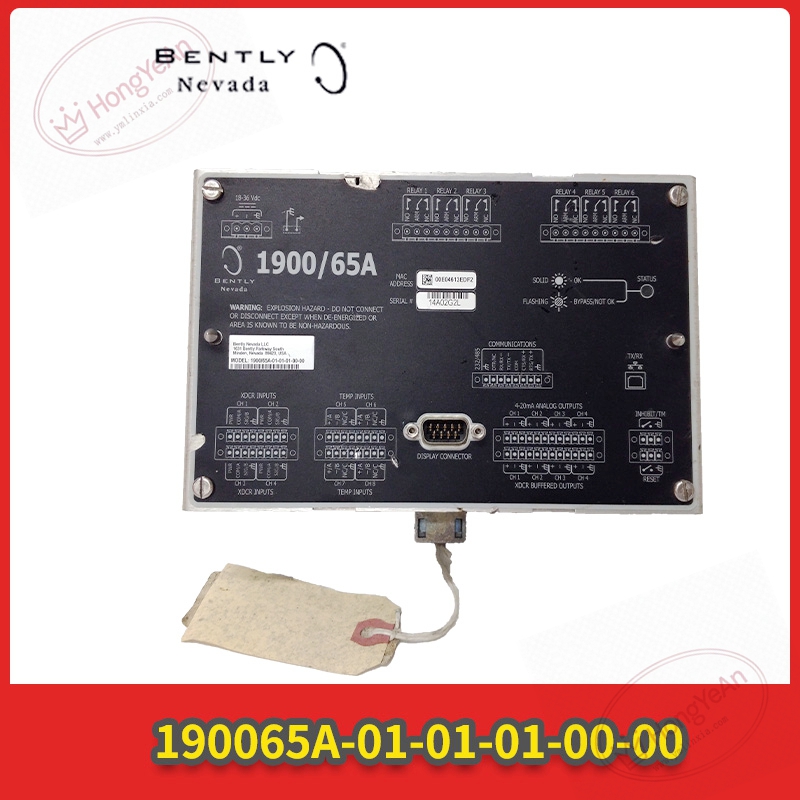
- Control & Output: Equipped with 6 programmable relay outputs, supporting custom alarm/danger setpoints, voting logic and bypass functions. Features buffered sensor signal output for portable on-site diagnostic testing.
- Communication Configuration (Model Match): Built-in standard Modbus gateway, supports RS485 serial communication, realizing real-time transmission of operating variables, alarm status and 200 historical event records to DCS/SCADA/System 1 platform.
- Power Specification: Universal industrial DC power input, stable operation under industrial power fluctuation conditions.
- Environmental Rating: Operating temperature: 0℃~+60℃; storage temperature: -40℃~+85℃; humidity 5%–95% non-condensing; meets industrial ESD and surge protection standards, adapting to harsh factory environments.
- Isolation Performance: Channel-to-channel electrical isolation, effectively suppressing cross-interference between different monitoring signals.
Structural & Hardware Features
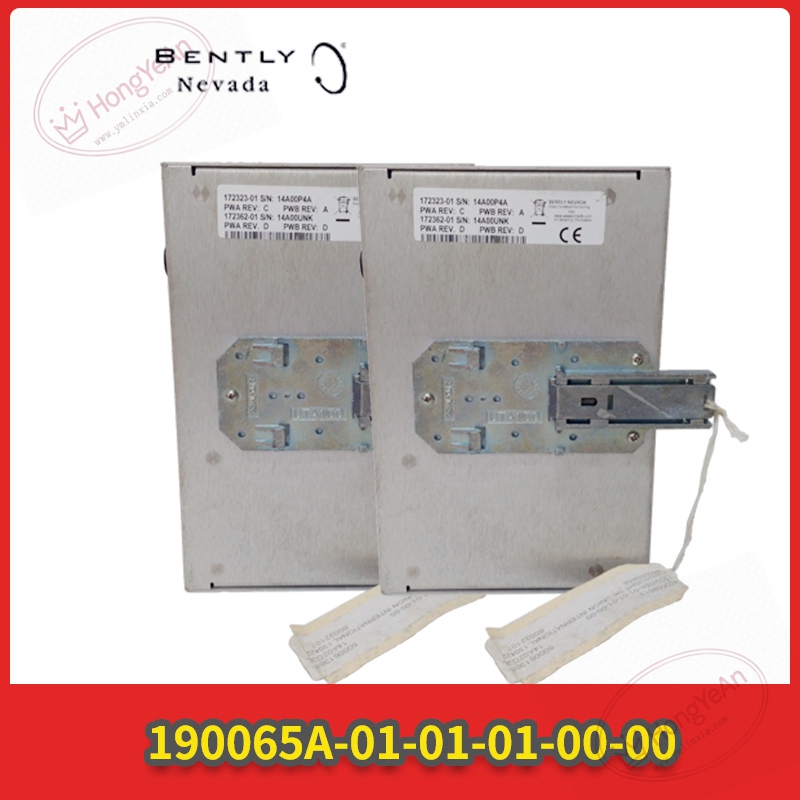
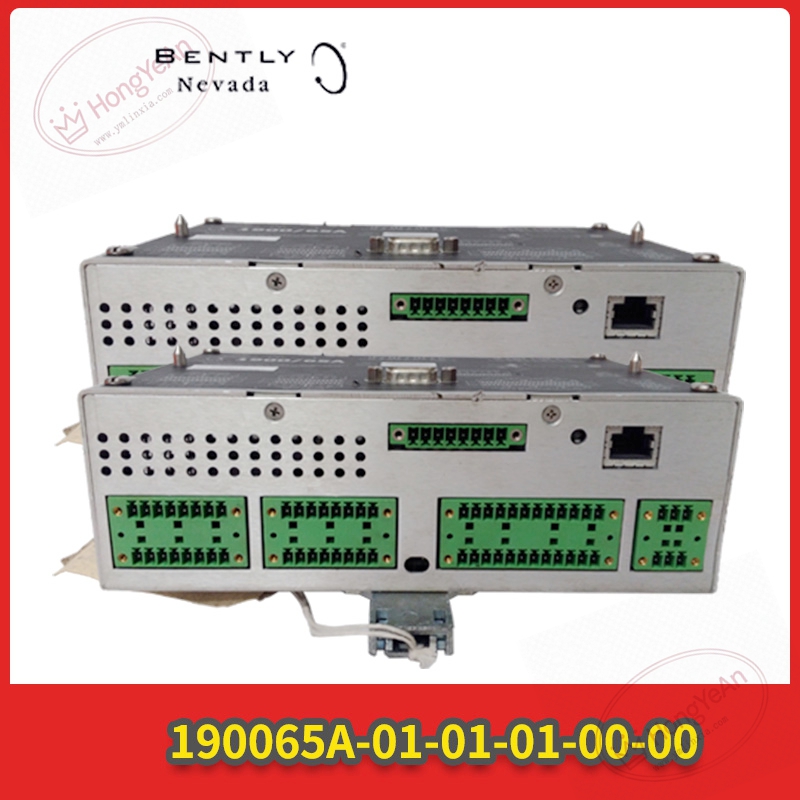
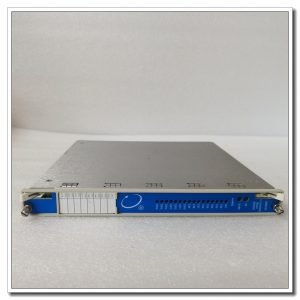
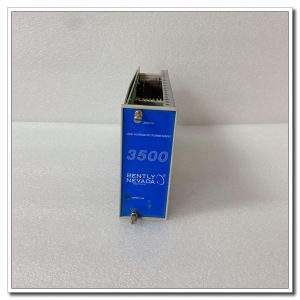
Compact panel-mounted integrated design, independent standalone device without need for rack backplane cooperation. Front panel equipped with LCD display and physical operation keys, supporting on-site parameter viewing, setpoint modification, offline configuration and firmware upgrade. Unified industrial terminal wiring design, standard conformal-coated PCB, dust-proof, moisture-proof and anti-corrosion, meeting long-term continuous operation requirements of field equipment. All core circuits adopt industrial-grade components to ensure stable long-cycle operation.
Industrial Application Scenarios
Mainly applied in power, chemical, metallurgy, water treatment and manufacturing industries. It undertakes full-cycle condition monitoring for auxiliary rotating equipment: continuous collection of shaft vibration, bearing vibration, shaft displacement, rotating speed and equipment temperature data. It automatically triggers early warning alarms or equipment trip protection when operating parameters exceed threshold values, preventing bearing wear, shaft vibration overload, over-temperature damage and other common mechanical faults.
Different from rack-based centralized monitoring systems, this standalone monitor features simple installation, flexible configuration and low maintenance cost, perfectly matching decentralized monitoring demands of scattered auxiliary equipment in industrial sites.
Installation & Commissioning Guidelines
- Adopt standard panel mounting, ensure firm fixation and good ventilation to avoid local overheating.
- Sensor signal cables use shielded twisted pairs, separated from high-power power cables to eliminate electromagnetic interference; standard grounding specifications are required.
- Complete sensor type matching, filter parameter tuning and alarm threshold configuration before commissioning; verify relay action logic and Modbus communication address consistency.
- Support online parameter modification and bypass setting, no need to shut down equipment during routine debugging and maintenance.
- Prohibit on-site component-level maintenance; replace the whole device in case of permanent hardware failure.
Common Field Faults & Troubleshooting
- Inaccurate monitoring data: Check sensor wiring tightness, shield grounding status and filter parameter matching; calibrate threshold parameters.
- False alarm / missing alarm: Verify setpoint configuration and relay voting logic; eliminate vibration interference and signal jitter.
- Communication offline: Inspect RS485 bus wiring, address baud rate setting and bus terminal resistance status.
- Display abnormal / no response: Check power input stability and internal firmware integrity; perform firmware reset and upgrade.
Reviews
There are no reviews yet.