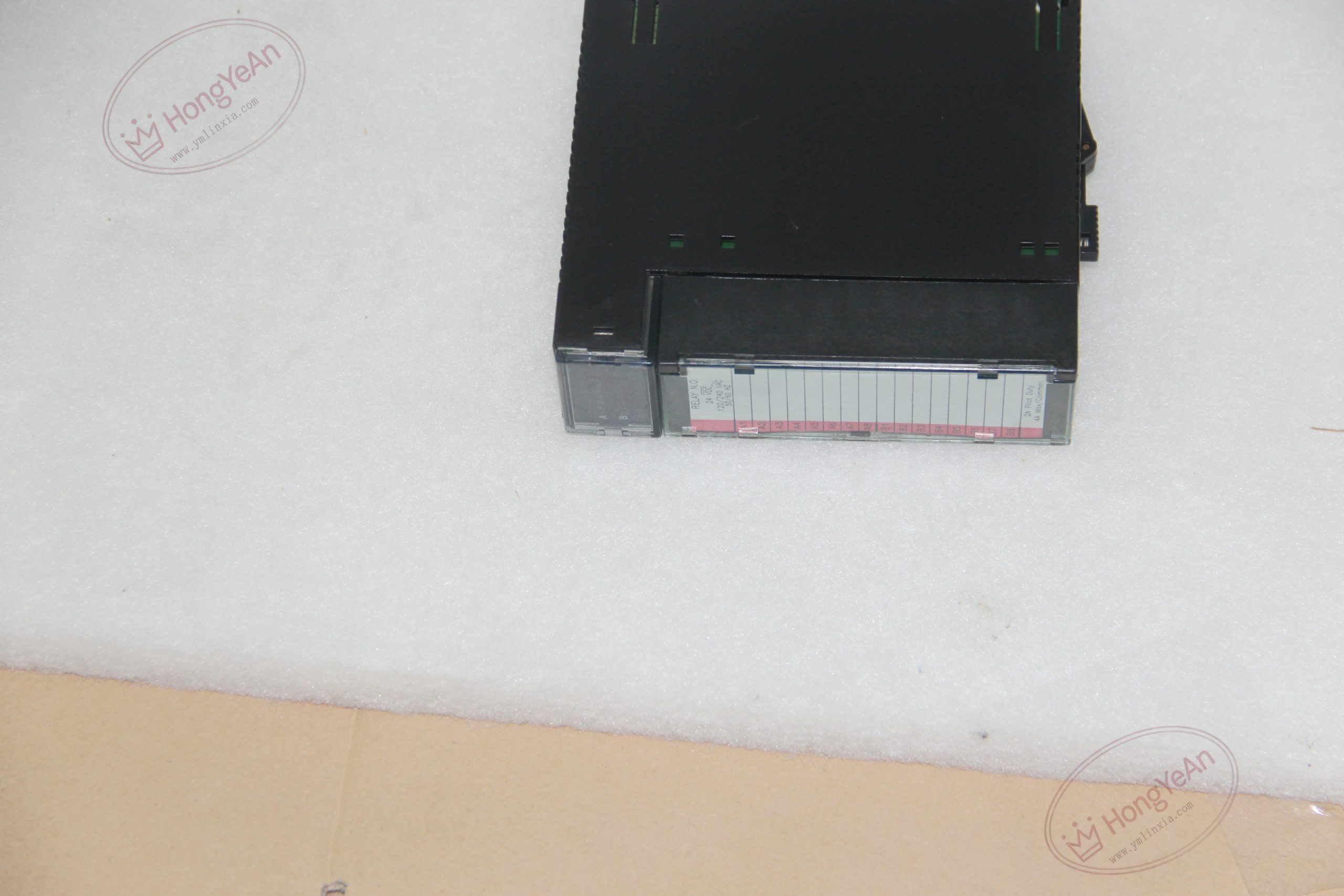
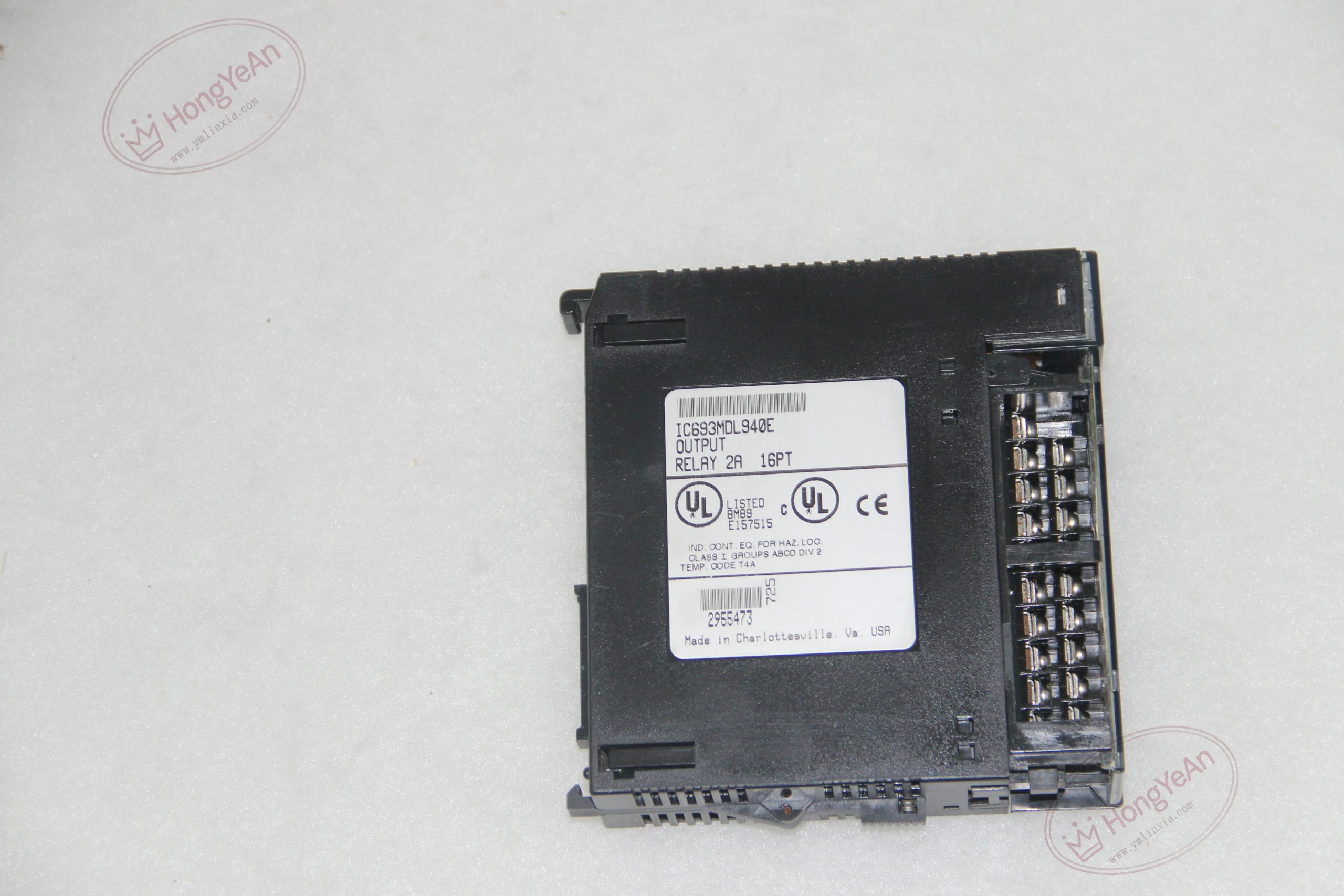
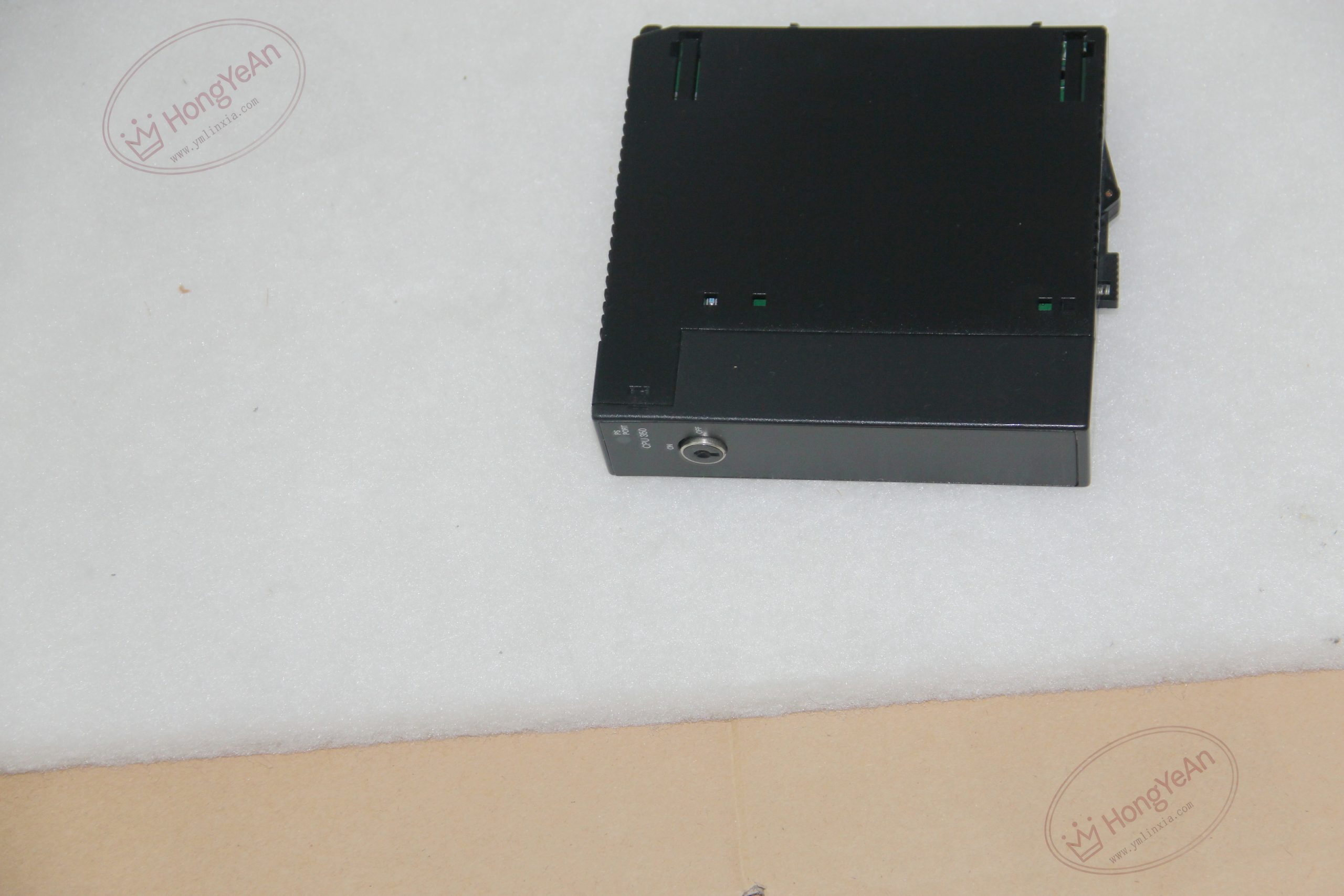
Description
1. General Information This module belongs to the Series 90‑30 I/O family. It occupies one rack slot and supports direct replacement among D, H, K hardware revisions. The unit uses dry‑contact relay outputs and does not generate field‑side power; it only completes circuit on‑off switching. It is designed for cabinet installation in standard industrial control systems.
2. Channel and Indicator Details There are 16 Form‑A normally‑open SPST relay channels, partitioned into four electrically isolated groups with four channels per group. Each group has its own common terminal. Different voltage sources can be applied to separate groups without electrical cross‑talk. Individual LED status LEDs are fitted for every channel, showing real‑time output state for commissioning and fault troubleshooting. No on‑board fuse is built‑in, external over‑current protection must be added on field wiring.
3. Electrical Specifications Supported working voltage covers 5‑30VDC and 5‑250VAC at 50/60Hz. Each channel maximum resistive load current is 2A. Each group combined current shall not exceed 4A, total module maximum load current is 16A. A minimum 10 mA wetting current is necessary to prevent contact poor‑connection caused by surface oxidation. Short‑time inrush current up to 5A is acceptable for load startup.
4. Switching and Isolation Performance Maximum operate time and release time are both 15 ms, suitable for low‑frequency on‑off control. Dielectric withstand voltage between field circuit and PLC logic side is 1500VAC for one‑minute test. Inter‑group isolation withstand voltage is 500VAC. Continuous operating withstand voltage is 250VAC.
5. Backplane Power Consumption Internal relay coils are powered by PLC backplane. With all outputs ON, current draw is 7 mA from 5V logic bus and 135 mA from 24V relay bus. Field loads need independent external power supplies.
6. Environmental Conditions Operating temperature: 0 °C to +55 °C. Storage and transportation temperature: ‑40 °C to +85 °C. Relative humidity: 5%‑95%, non‑condensing.
7. Application Notes Typical loads include solenoid valves, contactor coils, pilot lamps and motor starter control circuits. Since it adopts mechanical relay structure, frequent high‑speed switching will accelerate contact wear and shorten service life. The module meets UL, cUL and CE industrial certification requirements. Approximate unit weight is 0.43 kg.
-300x300.jpg)
Reviews
There are no reviews yet.