


Description
Hardware & Electrical Specifications
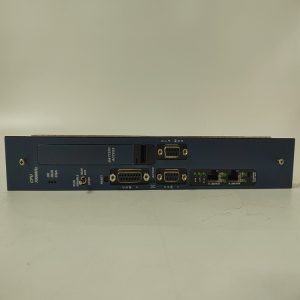
‑ Model: IC698RMX016 ‑ Part Number: IC698RMX016 ‑ Module Type: PACSystems RX7i Redundancy Memory Xchange Module, single‑slot VME module ‑ Mounting: RX7i main rack VME slot 3 / slot 4 recommended ‑ Backplane power consumption: • +5 VDC: 1.8 A maximum ‑ Shared memory: 16 MB parity‑checked SDRAM ‑ Fiber interfaces: Dual LC multi‑mode fiber connectors (Tx/Rx) ‑ Signaling rate: 2.12 Gbaud ‑ Max fiber segment distance: 300 m with 50/125 μm multi‑mode fiber ‑ Network throughput: 43 MB/s (4‑byte packets); up to 174 MB/s (64‑byte packets) ‑ Topology: Daisy‑chain closed fiber loop; max 256 nodes per network ‑ Compatibility: VMIC‑5565 reflective‑memory compatible ‑ Interrupts: Four programmable network interrupts with 32‑bit interrupt data, VMEbus interrupt output ‑ Operating modes: General reflective‑memory network / CPU redundancy synchronization link ‑ Diagnostics: Loop break detection, parity‑error monitoring, module self‑test, fault status accessible over VME backplane ‑ PCB treatment: Standard base version; conformal‑coated harsh‑environment variant suffix ‑ED ‑ Compatibility note: Requires RX7i CPU firmware V2.00 or newer. Hot‑swap prohibited. After replacement, download hardware configuration, assign unique node‑ID, verify fiber‑loop closure, validate reflective‑memory data mirroring or CPU redundancy synchronization performance according to system architecture.
Environmental Specifications
‑ Operating temperature: 0 ℃ ~ +60 ℃; ‑ED variant: −20 ℃ ~ +60 ℃ ‑ Storage temperature: −40 ℃ ~ +85 ℃ ‑ Relative humidity: 5%‑95% non‑condensing ‑ Vibration: 5 g, 10‑2000 Hz ‑ Shock: 30 g peak ‑ Installation location: Indoor control cabinet, IP20 protection class ‑ EMC compliance: IEC 61000‑6‑2 ‑ Certifications: CE, UL Class I Div 2 hazardous‑location certification
Mechanical Data
‑ Weight: approx 0.42 kg ‑ Dimension: RX7i standard single‑slot VME module form‑factor
Main Functions
- Hardware‑accelerated reflective‑memory: data written to shared memory on one node is automatically replicated to all loop nodes with ultra‑low latency, minimal CPU overhead, suitable for multi‑controller synchronous data sharing.
- Dedicated redundancy link for RX7i CRE hot‑standby CPU pairs, transfers large‑volume synchronization data between primary and standby controllers.
- Supports redundant transmission mode and programmable network interrupts for event notification to RX7i CPU.
- Front‑panel LED indicators: ‑ OK: Module power‑on self‑test passed ‑ LINK: Fiber‑loop network link active ‑ FAULT: Loop break, parity error, configuration error or hardware fault
Installation & Wiring Requirements
- Cut off full rack power supply before installation or replacement. Hot‑swap is not permitted. Apply ESD protection during module handling.
- Insert IC698RMX016 into VME slot 3 or slot 4 of RX7i main rack, secure face‑plate screws. For reflective‑memory network: build closed daisy‑chain loop: Tx of one node connects to Rx of next node, final node Tx loops back to first‑node Rx. For CPU‑redundancy mode, connect fiber between RMX modules of primary and standby rack.
- Fiber cabling comply with manual GFK‑2324; respect minimum fiber‑bending radius. Reliable protective‑ground connection for chassis is mandatory.
- After replacement: Restore rack power, check front‑panel LED status. Download configuration, assign unique node‑ID for every node on loop. Verify reflective‑memory data mirroring; if used for CPU redundancy, validate synchronization and bumpless fail‑over test.
- Replacement note: An open fiber loop will bring down the whole reflective‑memory network; all nodes must have distinct node‑ID. Full‑system commissioning test is mandatory before putting into service.
-1-300x300.jpg)
Reviews
There are no reviews yet.