Description
Technical highlights
8 isolated output channels, configurable for current or voltage mode. Output accuracy ±0.05% FS, response time ≤3 ms. Each channel integrates short‑circuit, over‑current and reverse‑polarity protection. Supports hot‑swap operation without system shutdown. Channel‑level diagnostic function detects circuit fault and reports alarm to DCS controller. Module draws power from Ovation rack backplane. Operating ambient: 0℃ ~ +60℃; storage‑40℃~+85℃; humidity 5‑95% non‑condensing; IP20 cabinet‑mount only. Compatibility note: Must work with matching personality module and base unit. Firmware version shall be consistent with Ovation controller. Mismatched hardware combination will trigger channel failure or communication error.
Physical features
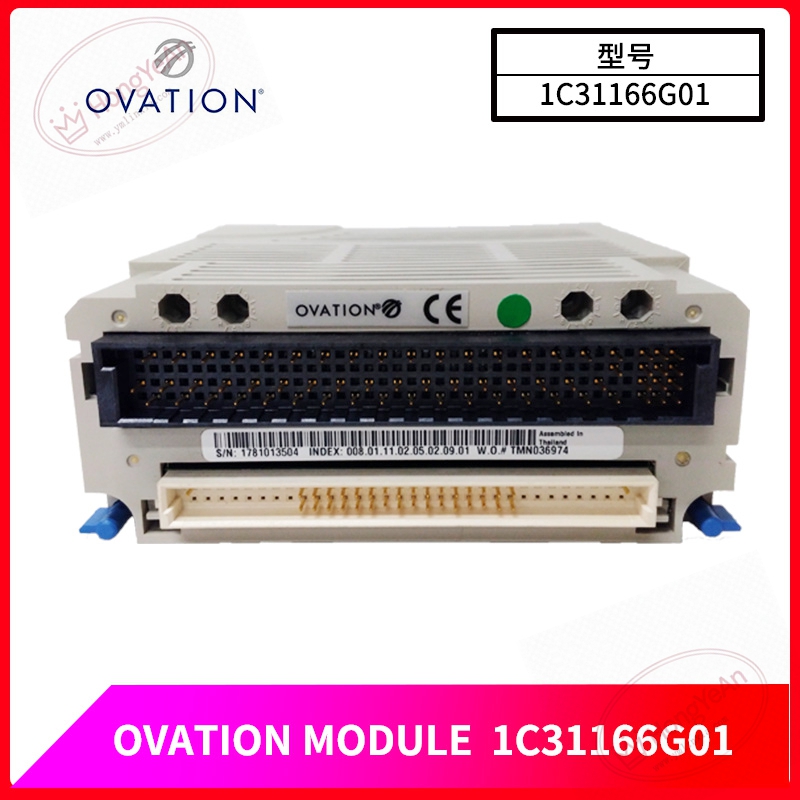
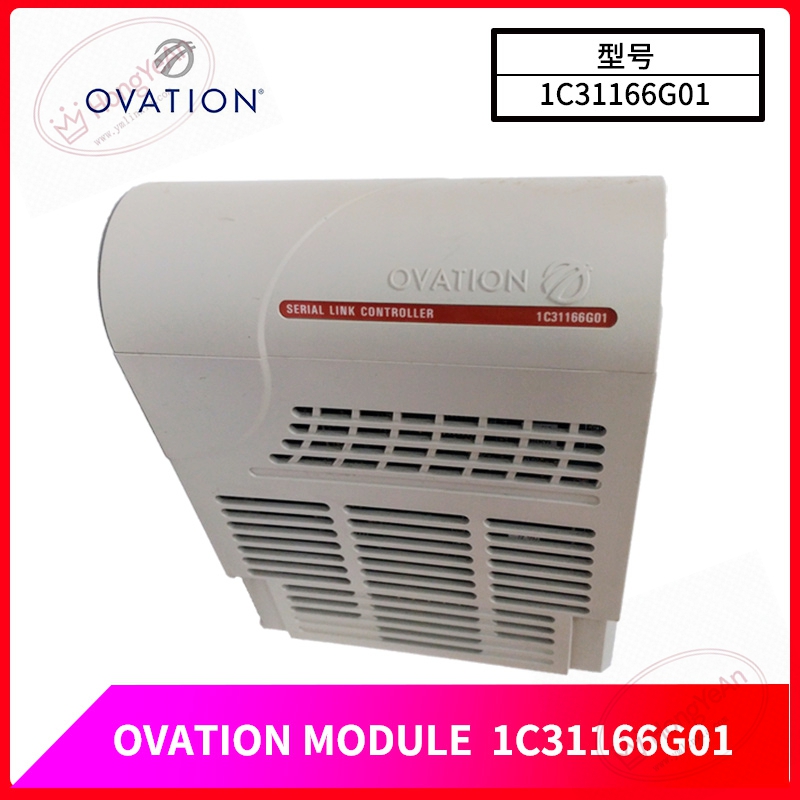
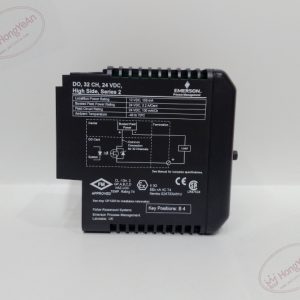
Standard Ovation rack‑plug‑in electronic module. Front panel is equipped with multi‑group status LED indicators for power, communication, internal and external fault diagnosis. Rear connector connects to rack backplane for power and internal bus data exchange. Signal wiring is completed via matched personality base terminal unit. Part‑number 1C31166G01 is marked on module label. PCB adopts conformal coating for anti‑dust and anti‑corrosion performance in power‑plant cabinet surroundings.
Site application scenario
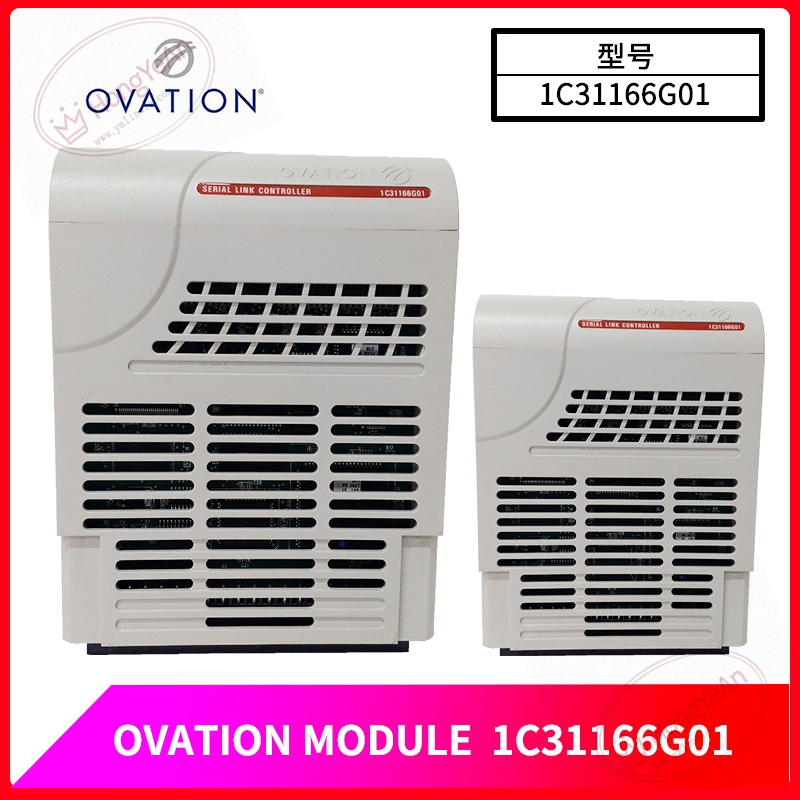
Mainly deployed in thermal power, nuclear power and large process‑industry Ovation DCS cabinets. It sends analog set‑point signals to control valves, dampers and variable‑speed drives for closed‑loop process regulation. Single‑channel damage causes corresponding actuator loop out‑of‑service. Module fault will lose all AO output channels. Hot‑swap replacement is allowed under normal system running condition. After replacement, install together with matched personality module, check backplane contact condition, download hardware configuration, test each channel output amplitude and stability before commissioning.
Installation & maintenance notes
Take anti‑static measures during module handling. Avoid scratching rear connector pins. Analog signal cables adopt shielded cables, keep separated from high‑power cables to reduce electromagnetic interference. Check terminal tightness on personality base during routine overhaul; poor contact will cause signal drift. On‑site component‑level repair is prohibited. Replace complete module under permanent hardware damage.
Common site fault performances
- Individual channel output offset or no output: Check field load and wiring condition, judge internal DA circuit damage after excluding external trouble.
- Module reports external fault alarm: Inspect field short‑circuit, overload or reverse‑polarity wiring.
- All channels no response: Verify rack backplane power supply and module‑base mechanical matching status.
- Intermittent signal jitter: Check cabinet temperature, cable shielding and grounding performance.
-300x300.jpg)
Reviews
There are no reviews yet.