Description
Detailed Technical Data
- Model: IMFF4703x
- Safety standard: IEC 61508 SIL3 certified
- Architecture: Triple Modular Redundancy, three parallel signal processing branches with 2oo2 voting
- Communication medium: Multimode fiber optics, galvanic full isolation
- Function: Convert electrical TriBus signals to optical signals for long-distance transmission
- Backplane supply: Powered by rack backplane, 24VDC
- Hot swap: Yes, online replacement without stopping the whole safety system
- System match: Tricon CX platform. Not compatible with classic Tricon v9~v11.
- Working temperature: -40℃ ~ +70℃; storage: -40℃ ~ +85℃; relative humidity 5%-95%, non-condensing
- Installation: Standard rack slot mounting inside control cabinet, IP20 protection
- Fiber connector: ST/SC type (depends on sub-version), anti-vibration locking design
- Self-diagnosis: Continuously monitor optical power loss, link break, TMR slice health, backplane communication error. Fault codes will be uploaded to TriStation engineering software.
- Installation tips: Keep fiber cable away from heavy pressure and sharp bending. Avoid exceeding maximum transmission distance defined by project design. Optical port dust caps must be kept on when unused to prevent contamination.
Physical Features
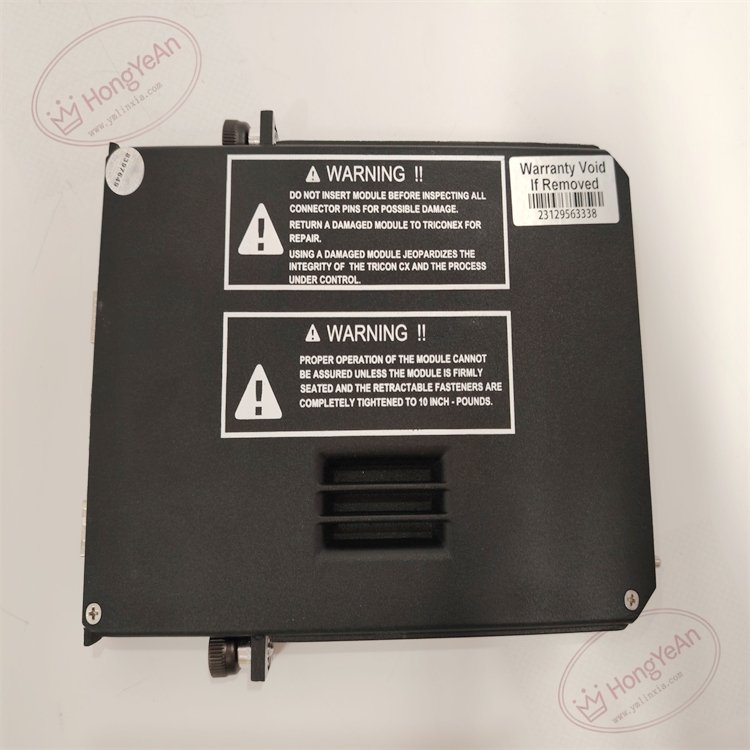
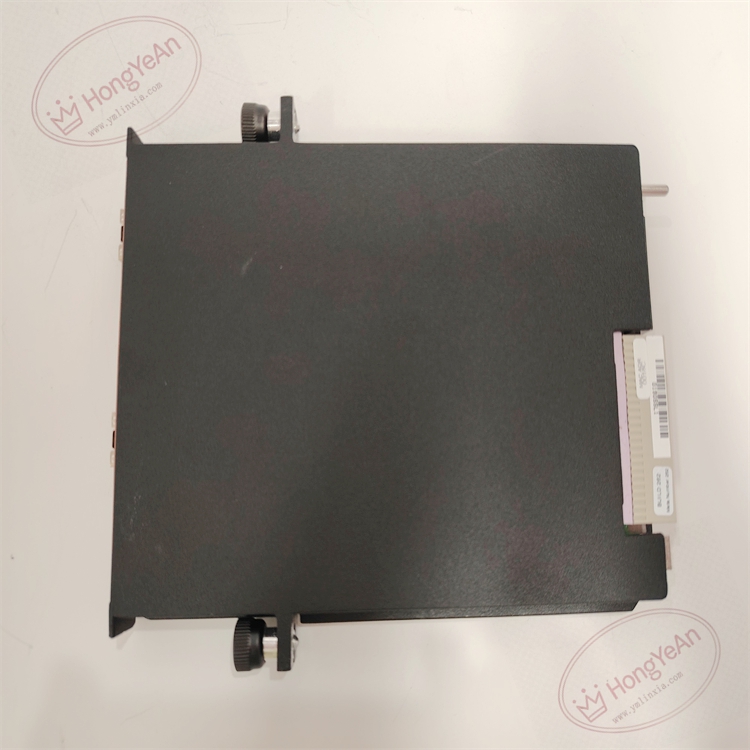
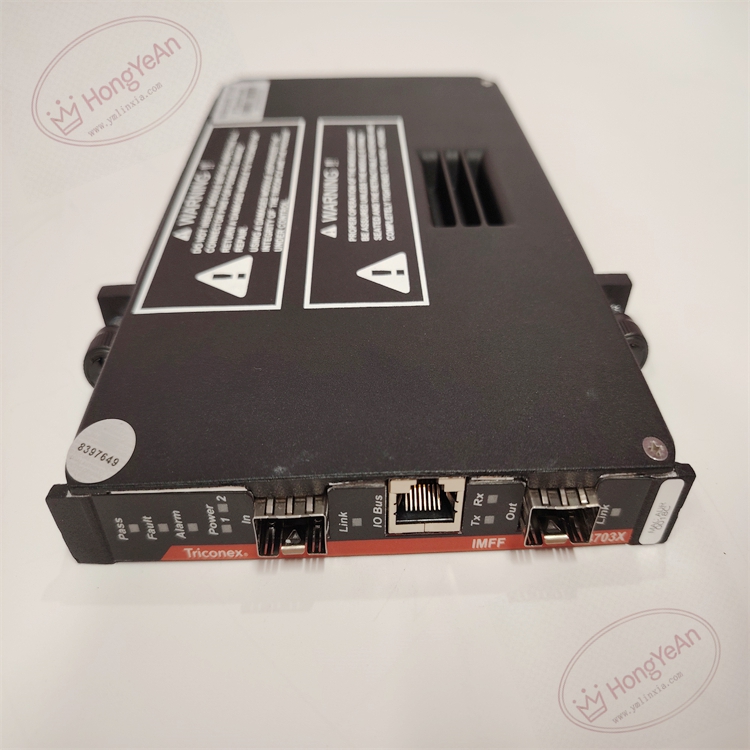
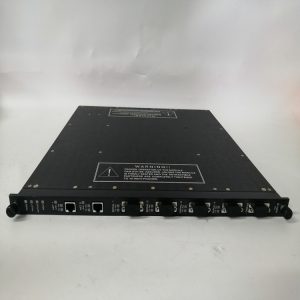
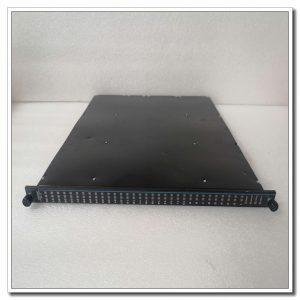
Metal front panel with LED indicators for power, link status, redundancy health and module fault. Gold-plated backplane connector for rack insertion. Two fiber ports are reserved on front side. Three independent redundant circuits inside the module. The part number and serial code are printed clearly on the side label.
Application Context
This fiber bus interface module is widely adopted in large-scale petrochemical complexes, refineries, gas compression facilities, power stations and offshore platforms. It belongs to ESD emergency shutdown, burner management and turbomachinery protection safety loops. It connects the main controller rack with remote I/O expansion cabinets over long distances. Fiber transmission eliminates ground loop risks and electromagnetic interference, protecting main rack hardware from surge and noise on long copper cables.
Maintenance Guidance
This safety-critical communication module runs continuous background diagnostics. Low optical power or fiber disconnection will trigger system alarms. All module handling work requires anti-static wristband. Shut down related rack segment before removing or inserting the card. Inspect LED indicators, fiber connector cleanliness and fiber cable routing during regular site inspection. Keep cabinet dry and dust-free. Prevent corrosive gas or liquid from touching optical ports and PCB. After module replacement or fiber re-termination, test optical attenuation and verify link stability. Review diagnostic logs and confirm no communication alarms. Prepare spare modules and spare fiber patch cords. Replace the whole module when internal circuit is damaged; do not attempt component-level repair on site. Keep dust caps on unused fiber ports at all times.
Troubleshooting Guide
- No optical link: Check fiber connector cleanliness, dust caps, fiber breakage and port damage.
- Intermittent link drop: Inspect fiber bending radius, vibration at connectors, optical attenuation exceeding limit.
- Module fault LED on: Check backplane power supply, module seating, run TMR hardware self-test in software.
- Communication failure after replacement: Confirm IMFF4703x matches Tricon CX system version, verify fiber pairing and configuration.
- High optical attenuation alarm: Clean fiber end faces; check for crushed cable or long-term aging of fiber.
-300x300.jpg)
Reviews
There are no reviews yet.