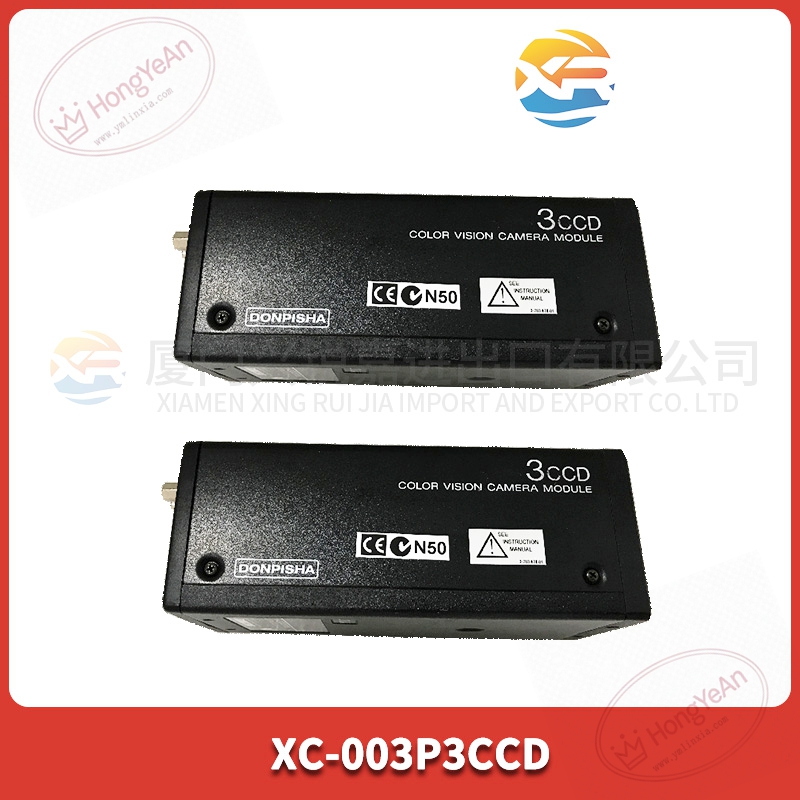
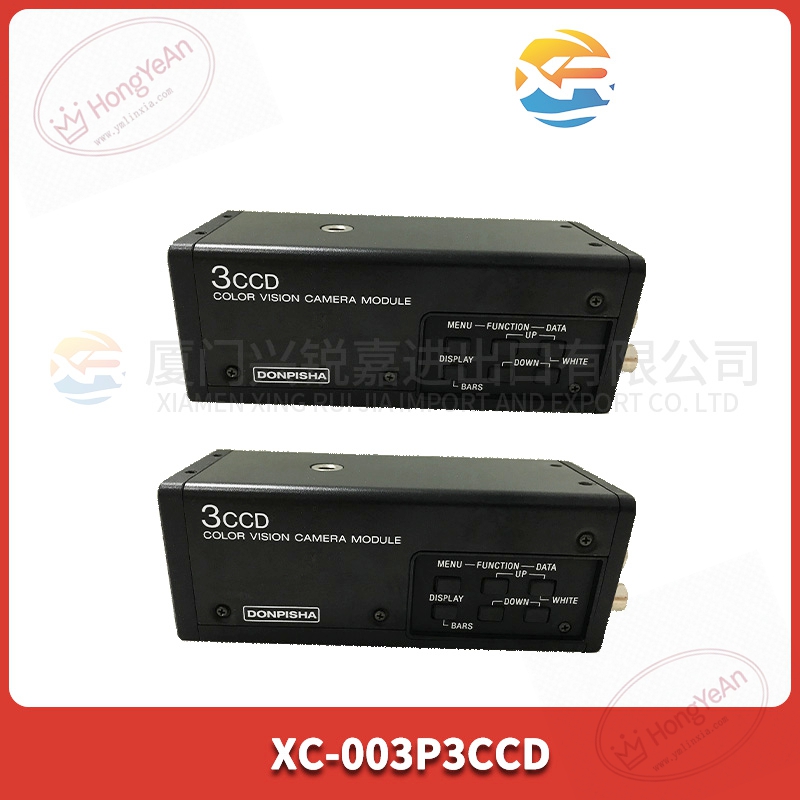
Description
Technical highlights
Sensor: 1/3‑inch Hyper HAD interline transfer 3‑CCD, PAL system. Effective pixels: 752(H) × 582(V), horizontal resolution 570 TV lines. Lens interface: standard C‑mount, flange back 17.526 mm. Video outputs: RGB‑SYNC D‑sub connector, Y/C and composite VBS BNC ports. Shutter range: 1/10000 s ~ long‑time cumulative exposure mode. Supports external trigger capture and auto white‑balance function. Working power: 12 VDC. Operating ambient:‑10℃ ~ +50℃; storage‑40℃ ~ +70℃; humidity 5‑95% non‑condensing; IP20 cabinet‑mount or equipment‑internal installation. Compatibility note: Matches dedicated frame‑grabber card accepting analog RGB video signal. Camera menu parameters need to be saved before replacement. Direct mixing with NTSC‑version XC‑003 will lead to image distortion.
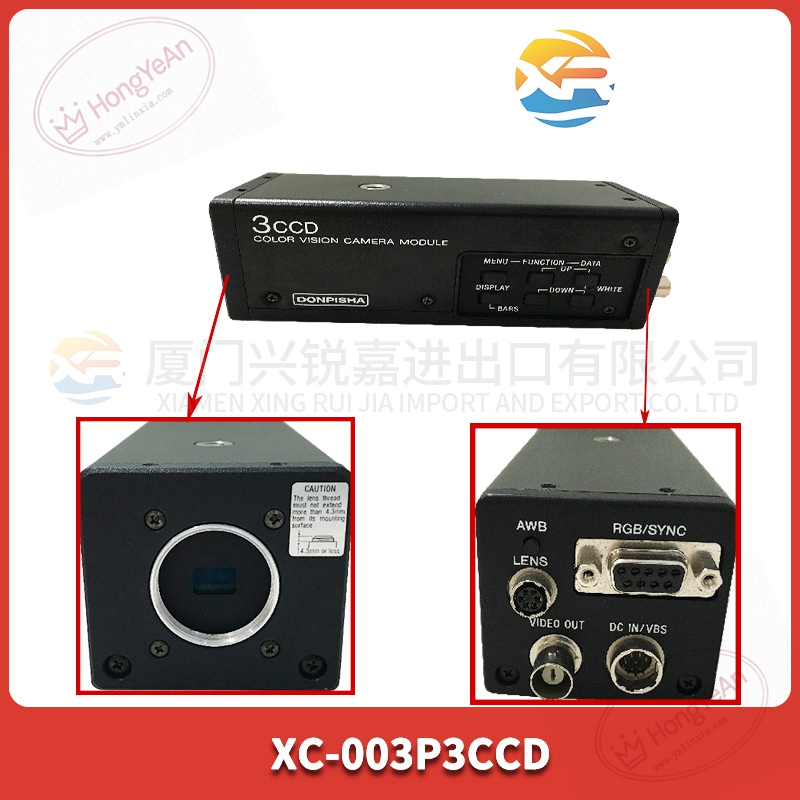
Physical features
Compact metal‑enclosed camera body. Front side is C‑mount lens mounting interface. Rear panel includes D‑Sub RGB‑sync port, BNC video connectors, DC power input and AWB adjustment button. Part‑number XC‑003P3CCD is printed on housing nameplate. Internal PCB uses conformal‑coated treatment for dust‑resistance in industrial surroundings.
Site application scenario
Mainly deployed in precision‑manufacturing visual inspection platforms, optical‑measurement instruments and legacy scientific‑research imaging systems. It outputs high‑accuracy color analog image signals for defect detection, color classification and size measurement. Camera hardware failure will terminate image acquisition. After replacement, install matched C‑mount lens, check all video‑cable connections, adjust white‑balance and shutter parameters, verify image display quality before commissioning.
Installation & maintenance notes
Disconnect 12 VDC power supply before replacement. Anti‑static handling is required during operation. Do not scratch CCD sensor surface without professional tools. Analog RGB signal cables should adopt shielded twisted‑pair, keep separated from high‑power cables to restrain electromagnetic interference. Protect lens interface and optical prism assembly from dust and vibration. On‑site component‑level repair for internal optical‑path is prohibited; replace complete camera unit under permanent hardware damage.
Common site fault performances
- Image color cast or color deviation: Re‑execute auto‑white‑balance calibration, inspect cable connector contact condition.
- No image output: Check 12VDC power input and video‑cable wiring integrity.
- Image appears flicker or noise: Verify shutter‑speed setting matches site lighting frequency, inspect cable shielding grounding.
- Partial image area dark: Check lens installation locking status, judge sensor contamination risk.
Reviews
There are no reviews yet.