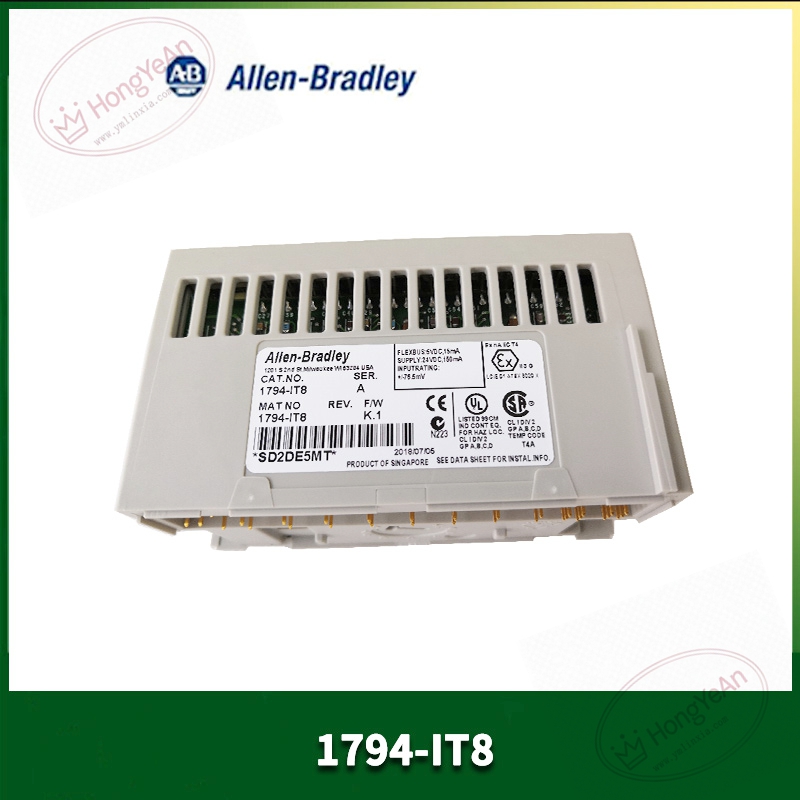
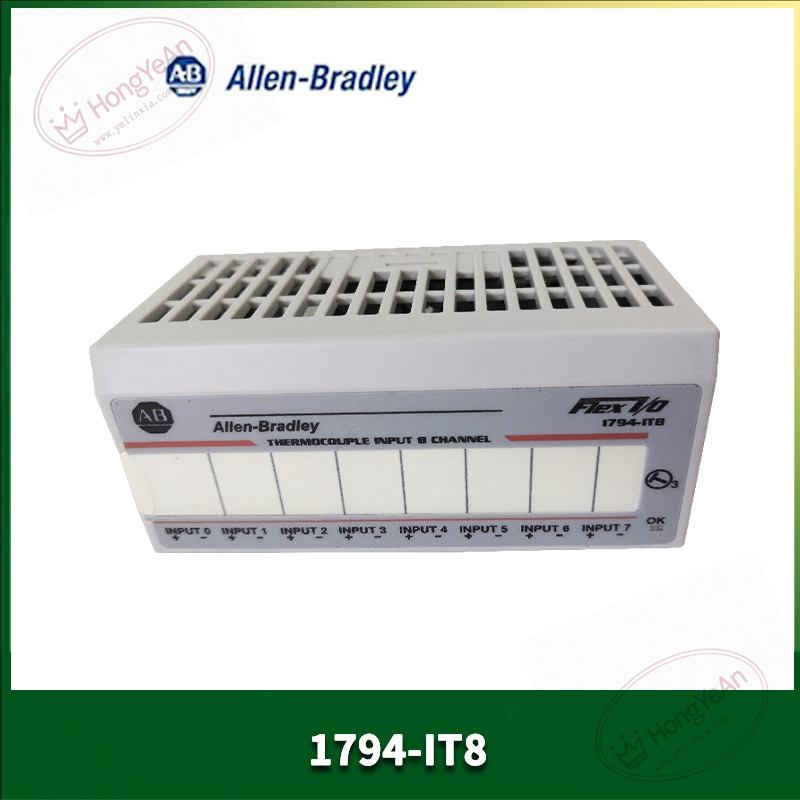
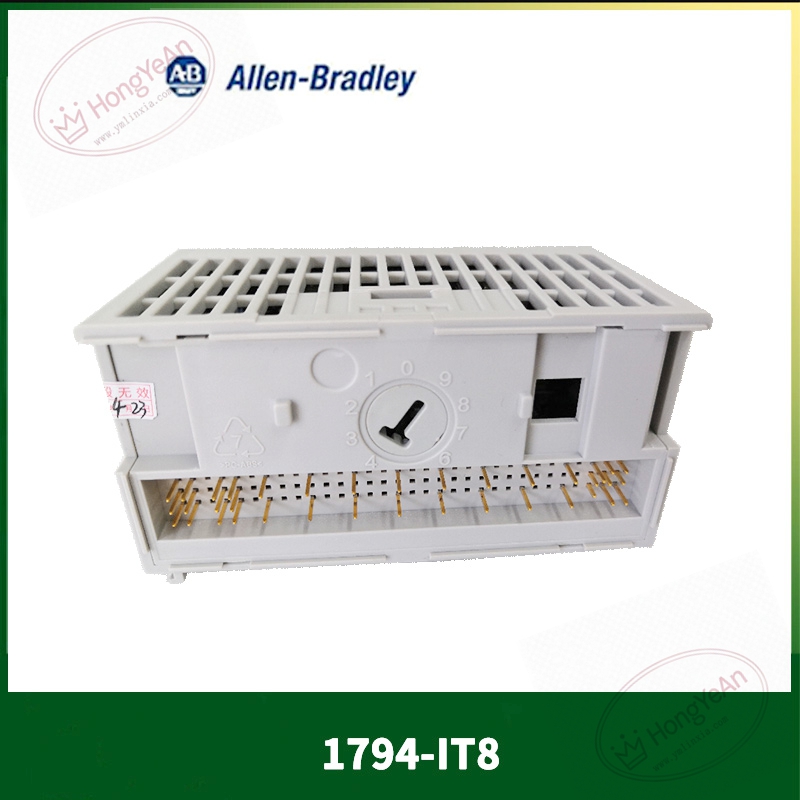
Description
Key Technical Parameters
Installation: Matched with 1794‑TB2 / TB3 series terminal base, key switch set to position 3 Channel: 8 differential input channels, supports thermocouple signal and millivolt‑level weak signal Supported TC types: J, K, E, T, B, R, S, N etc. Input range:‑76.5 ~ +76.5 mV Resolution: 16‑bit Cold‑junction compensation: Built‑in on‑board cold‑junction sensor Diagnostic function: Open‑wire detection, over‑range / under‑range alarm per channel Power supply: 24VDC field power supplied via terminal base Communication: Flex I/O bus, cooperates with 1794‑ADN remote adapter Status indicator: Module OK LED indicator Software: RSLogix500 / Studio 5000 Environment: 0‑60℃ cabinet‑mount installation; UL, CE certification Note: Channels are non‑isolated; thermocouple cable must use dedicated compensating wire
Practical Application Features
Built‑in cold‑junction compensation, no extra external compensation component required. Open‑circuit detection can quickly alarm thermocouple wire break fault to PLC. Each channel can independently set thermocouple type to adapt multi‑temperature measuring points. Distributed Flex I/O layout, install module close to temperature sensors to reduce compensating‑wire consumption. Suitable for oven, heat‑treatment equipment, chemical tank temperature monitoring and old‑site spare‑part replacement.
Field Installation & Commissioning Guidance
Power off terminal‑base power before installation, set terminal‑base key‑switch to position 3. Align and lock module onto terminal base; use thermocouple compensating cable for field wiring. Add 1794‑IT8 into hardware configuration, select corresponding thermocouple type for each channel. Set over‑range / under‑range alarm parameters according to process requirement. Keep thermocouple compensating‑cable away from inverter and high‑power power cables to avoid interference. After downloading configuration, compare module reading with actual temperature to verify measuring accuracy.
In‑Site Troubleshooting Reference
- OK LED off: Terminal base power failure, poor module locking, Flex bus contact bad.
- Temperature reading full‑scale high/low: Thermocouple wire open‑circuit, wrong thermocouple‑type parameter setting.
- Large temperature drift: Non‑compensating ordinary cable used, strong electromagnetic interference, optimize wiring routing.
- Intermittent jumping value: Loose terminal wiring, bad shielding grounding of cabinet.
- Module cannot be identified: Wrong key‑switch position on terminal base, inconsistent hardware configuration.
- Cold‑junction related fault: Ambient temperature exceeds module operating range, check cabinet ventilation condition.


Reviews
There are no reviews yet.