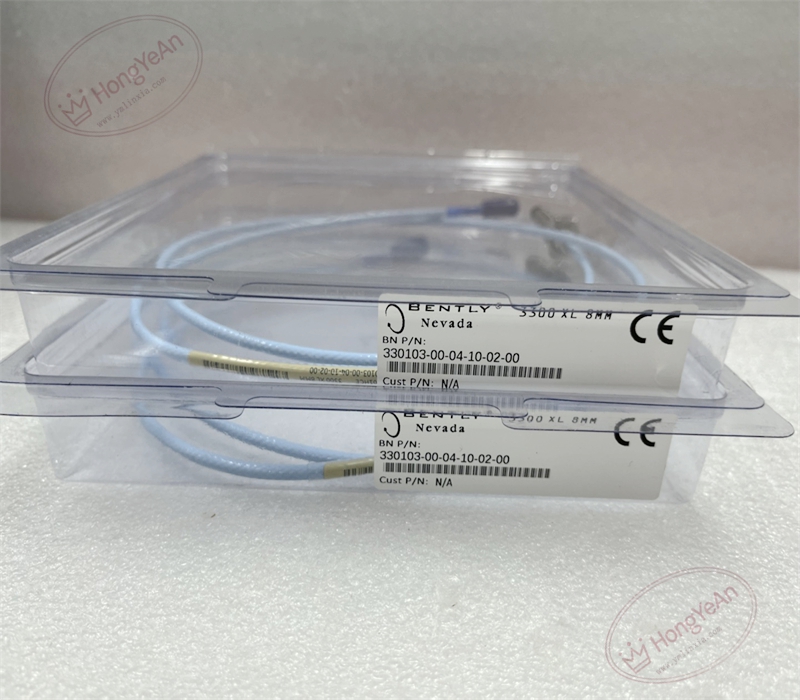
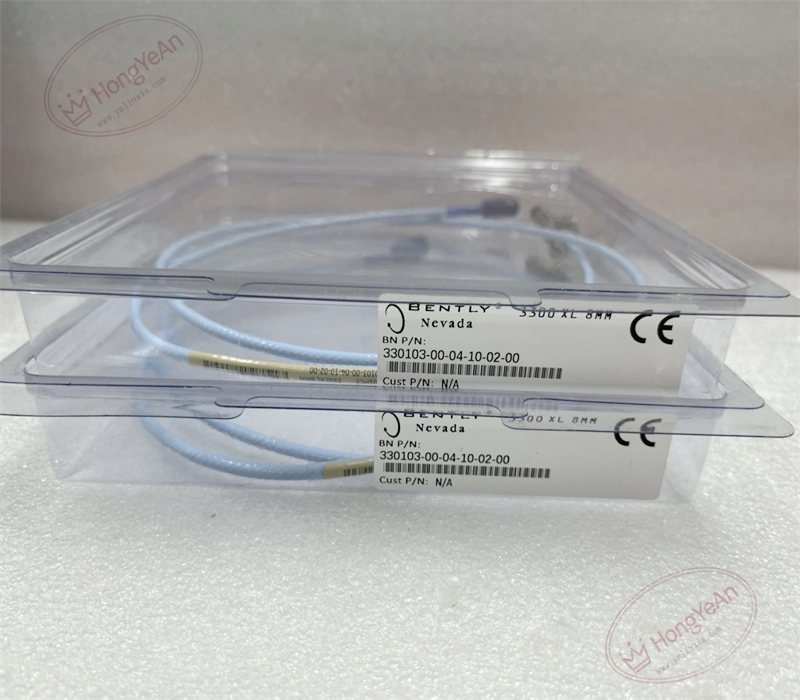
Description
Hardware & Electrical Specifications
‑ Manufacturer: Bently Nevada (Baker Hughes) ‑ Device Type: 3300‑XL 8 mm Eddy‑current Proximity Probe ‑ Probe Tip Diameter: 8 mm ‑ Linear Measurement Range: 2 mm (80 mil) ‑ Nominal Sensitivity: 7.87 V/mm (200 mV/mil), tolerance ±5 % ‑ Thread Specification: M10 × 1 ‑ Case Length: 40 mm ‑ Integrated Probe Cable Length: 1 m ‑ Connector Type: ClickLoc miniature coaxial connector ‑ Probe Tip Material: Polyphenylene sulfide (PPS) ‑ Housing Material: AISI 303 / 304 stainless steel ‑ O‑Ring: Viton sealing ‑ DC Resistance: 7.59 Ω ±0.5 Ω ‑ Frequency Response: DC‑10 kHz (‑3 dB) ‑ Operating Temperature: ‑51 ℃ ~ +177 ℃ ‑ Storage Temperature: ‑55 ℃ ~ +185 ℃ ‑ Minimum Cable Bend Radius: 25.4 mm (1 inch) ‑ Construction: Non‑armored cable ‑ Certifications: CE, CSA, ATEX hazardous‑area approvals
Environmental Specifications
‑ Relative Humidity: 5%‑95 %, non‑condensing ‑ Vibration Resistance: Complies with API‑670 field installation vibration requirements ‑ Chemical Resistance: Resists oil mist, turbine lubricant and common industrial contaminants
Core Functions
- Non‑contact gap sensing: Generates high‑frequency eddy‑current field to detect physical clearance between probe tip and metallic shaft target, converts mechanical gap variation into RF signal sent to proximitor.
- Radial‑vibration measurement: Captures dynamic shaft radial vibration for turbine, compressor and generator condition monitoring.
- Axial‑thrust‑position measurement: Monitors static thrust‑shaft displacement to detect thrust‑bearing wear.
- System interchangeability: 3300‑XL components support module‑to‑module interchangeability without individual bench calibration when total system electrical length is maintained.
- Harsh‑environment adaptability: High‑temperature probe tip and corrosion‑resistant stainless‑steel housing suit long‑term operation inside turbine casings and cabinet environments.
Installation, Replacement & Critical Warnings
- This sensing probe cannot be hot‑swapped. Isolate the measurement channel before probe removal or mounting work.
- Compatibility warning: ‑ The total electrical length (probe plus extension cable) shall strictly match the paired 3300‑XL proximitor specification. Do not use extension cables of arbitrary length. ‑ Target surface material must be standard ferrous or non‑ferrous steel; hard coating, plating or small target dimensions will reduce effective linear range. ‑ Mount via M10×1 thread and lock‑nut; control mounting torque to avoid thread damage or probe‑tip deformation. ‑ Recommended operating gap setting: approx 1.27 mm (50 mil), corresponding to proximitor output of about ‑9 Vdc. ‑ Signal cables shall be routed separately from high‑voltage power and variable‑frequency‑drive cables to minimize electromagnetic crosstalk. ‑ Avoid sharp bending, pulling or squeezing the probe cable; excess cable shall be loosely coiled observing minimum bend‑radius limits. ‑ Connector contacts shall be kept clean; inspect for dirt, oil and corrosion before mating.
Commissioning and Verification Criteria
- Confirm mechanical mounting: probe is securely locked, tip has safe clearance to rotating target, no mechanical collision risk.
- Perform static gap calibration: adjust probe installation gap within valid linear range, verify proximitor output voltage changes linearly with gap movement.
- Check raw signal waveform through proximitor BNC test port; waveform shall be stable without excessive noise.
- Under machine stand‑still and running conditions, confirm vibration and position readings are stable, without random jumping or drifting.
- Simulate probe‑loop open‑circuit / short‑circuit condition to verify system loop‑fault alarm activates correctly.
-300x300.jpg)
Reviews
There are no reviews yet.