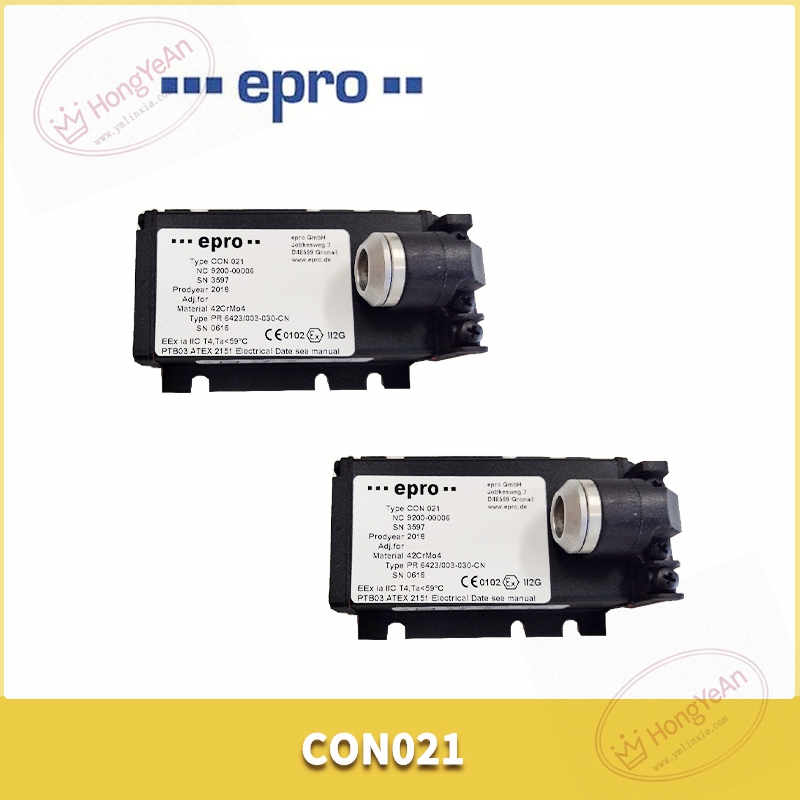
Description
Core performance features
Compact metal housing, panel‑mount installation with four M5 mounting screws. Sensor connects via LEMO circular connector; power and output signals are wired through screw terminals on the side of the unitepro-sh.co…. Power supply requirement:‑23 VDC ~‑32 VDC negative supply. Output range‑4 V ~‑20 V proportional to probe gap distance. Frequency response 0‑20 kHz, rise time below 15 μs for fast dynamic vibration capture. Built‑in linear correction and temperature compensation circuits to offset probe drift caused by site temperature variation. Internal protection against short‑circuit and reverse power connection. No on‑board display LED; working status is read through the upper monitoring system. IP20 protection rating, for installation inside control cabinets. Operating temperature‑30 ℃ ~ +100 ℃, unit weight approx 120 g. Important note: Each CON021 must be factory‑matched with its corresponding eddy‑current probe. Mismatched probe‑conditioner pairs will create large measurement deviation.
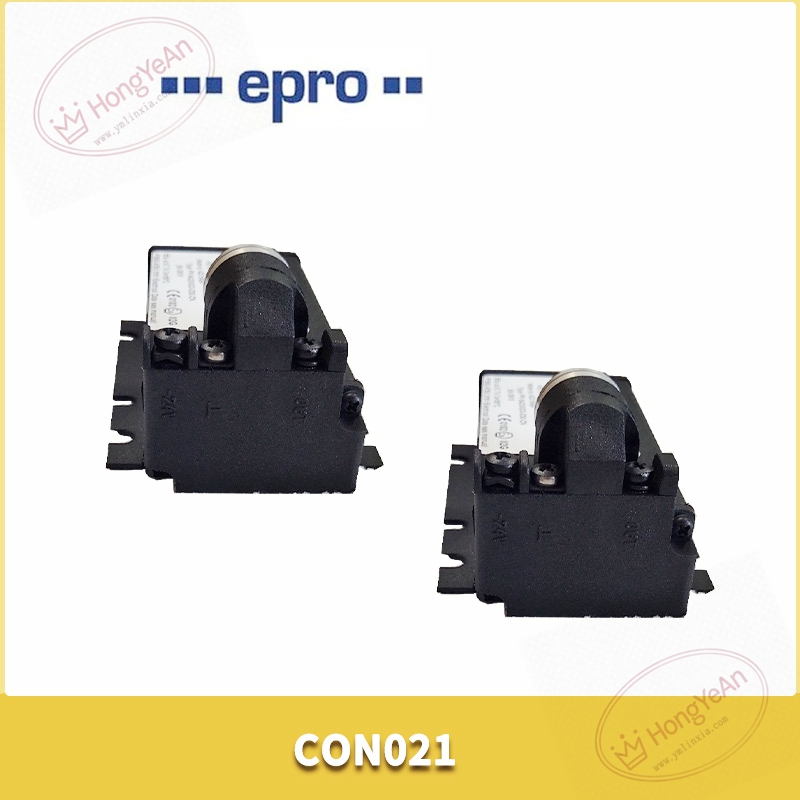
Physical appearance
Small rectangular die‑cast aluminum metal shell, matte black finish. ‑ One end: LEMO socket for connecting eddy‑current probe cable. ‑ Side: screw terminal block for power supply and analog output wiring. ‑ Four mounting holes on base for screw fastening onto cabinet plate or rail bracket. ‑ Outer label prints part number CON021 and matching probe serial number.
On‑site application scenarios
Commonly paired with EPRO MMS6000 machinery monitoring racks in power‑plant and petrochemical workshops. It converts tiny impedance changes from eddy‑current probes into usable analog signals, feeding vibration and shaft‑position data to protection and condition‑monitoring systems. If this conditioner fails, vibration or displacement readings will be lost, which may trigger machinery protection interlock. It serves as standard replacement spare for existing turbomachinery monitoring loops. After replacement, confirm the new unit shares factory calibration pairing with the field probe. Perform gap adjustment and signal calibration before putting back online.
Installation & operating notes
Mount unit in well‑ventilated cabinet area; avoid direct heat radiation from power components. Probe signal cable must be high‑quality shielded cable. Keep physical separation from high‑power cables to reduce electromagnetic noise. Never mix unmatched probes and CON021 units. Every conditioner is calibrated for one specific probe serial number. Check negative DC power supply range. Under‑voltage supply will lead to incomplete linear output range. Do not open metal housing on‑site. Replace whole unit for hardware faults; component‑level repair voids measurement accuracy.
Common field phenomena & disposal thoughts
- No valid output signal after power‑on: Check‑24V ~‑32V negative power supply polarity and voltage value. Inspect LEMO connector locking status.
- Measurement reading drift / offset: Verify whether conditioner and probe are original factory‑matched set. Check cable shielding grounding and cabinet temperature rise.
- Vibration reading jitters randomly: Re‑tighten LEMO plug. Check for vibration‑induced loose wiring terminals. Eliminate nearby strong interference sources.
- Output saturated, cannot change: Confirm probe‑to‑shaft air gap is within linear measuring range. Check for mechanical collision damage to probe tip.
-300x300.jpg)
-300x300.jpg)
Reviews
There are no reviews yet.